Horseshoe Bend Rafting: The Glen Canyon Float From Page
The Horseshoe Bend rafting trip is a five-hour smooth-water float on the Colorado River between Glen Canyon Dam and Lees Ferry, run by Wilderness River Adventures out of Page. It is the only one-day river trip connected to the national park, and it sells under two listings on this site. Here is what each one gets you.
Short answer
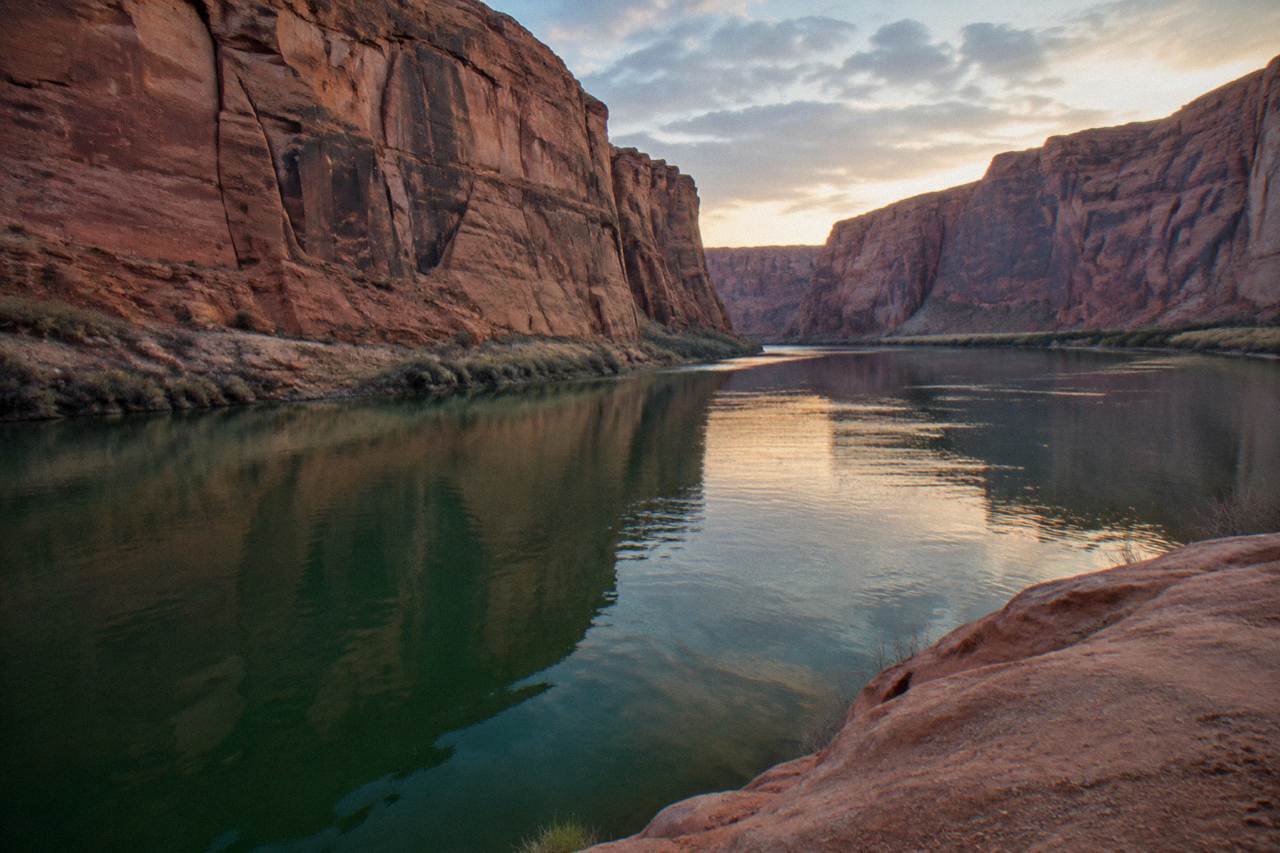
The Horseshoe Bend float runs about 5 hours, covers roughly 10 river miles of smooth water with no rapids, and departs from Page with a bus ride to Lees Ferry. It costs from $149.51 per person, takes children from age 4, and runs the 2026 season from March 1 to about November 3. The two listings here sell the same trip with different meal and cancellation terms.
The Horseshoe Bend rafting trip is a five-hour motor-raft float on the Colorado River between Glen Canyon Dam and Lees Ferry, sold out of Page. It is smooth water the whole way: no rapids, no paddling required, children from age 4 aboard. The overlook above the bend, the one in every photograph, is a separate thing with its own parking fee, and this guide keeps the two clearly apart. The float itself is the park service's designated one-day river trip, run by Wilderness River Adventures, an authorized park concessioner, and it appears on this site as two listings of the same trip with different meal and cancellation terms. That difference, plus the season schedule and the cost picture, is what this page works through. If you want to build one day around both the overlook and the river, the guide to pairing Antelope Canyon with the Horseshoe Bend float lays out how the pieces fit.
What Is The Horseshoe Bend Rafting Trip?
The Horseshoe Bend rafting trip is a guided, motorized smooth-water float covering about 10 river miles of the Colorado River between Glen Canyon Dam and Lees Ferry in roughly 5 hours, with no rapids, paddling, or prior experience required. Run by Wilderness River Adventures, the park's authorized one-day river concessioner, it departs from Page by bus to the Lees Ferry launch and welcomes children ages 4 and up. If you'd rather drift this calm stretch under your own power, our plain-language guide to floating from Glen Canyon to Lees Ferry explains the free permit rule for private rafts and kayaks.
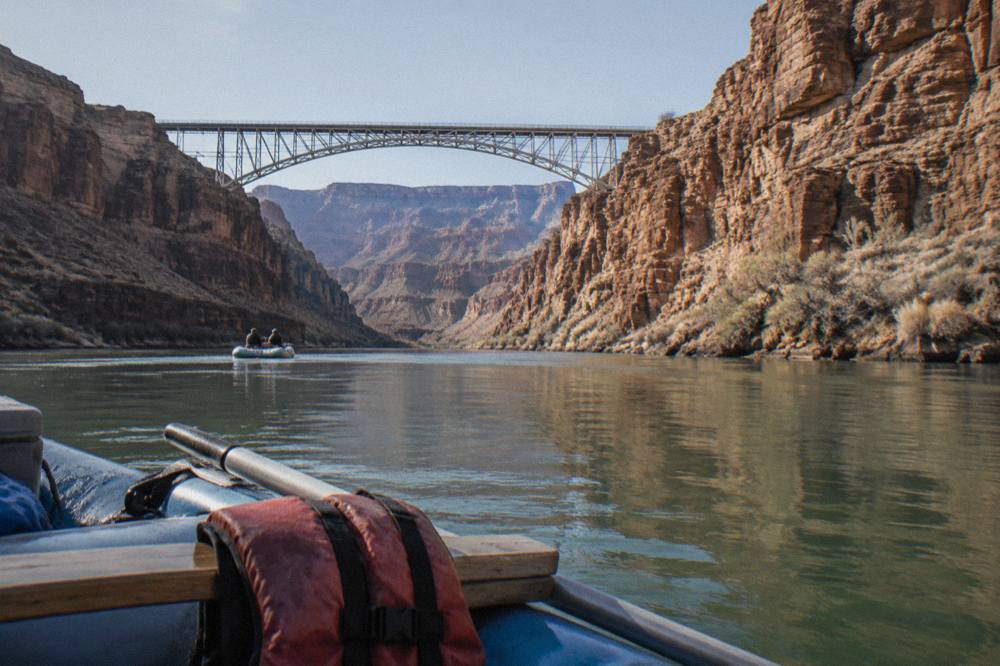
The stretch of river matters, because it explains what the trip is and is not. The water between Glen Canyon Dam and Lees Ferry is the tailwater section above the Grand Canyon proper. It is flat, clear and calm, which is exactly why the park service names these smooth-water trips as the only one-day river trips connected to Grand Canyon National Park. Everything below Lees Ferry, the actual Grand Canyon, takes multi-day commitment: the commercial trips through the canyon run 3 to 18 days and are often reserved a year or two ahead. If your search for "horseshoe bend rafting" is really a search for a single day on the Colorado with a famous view in it, this float is the product that exists.
The trip is run by Wilderness River Adventures, part of Aramark Destinations, and the same operator also holds the multi-day concession, so the guides on the half-day float work the same river system year round. Guests check in at the operator's Page headquarters at 199 Kaibab Road, 45 minutes before departure, then ride the bus to Lees Ferry. Lees Ferry sits 42 miles from Page via Highway 89 south and 89A west, and as the Glen Canyon page notes, it is the only place in over 700 miles of canyon country where you can drive right down to the Colorado River.
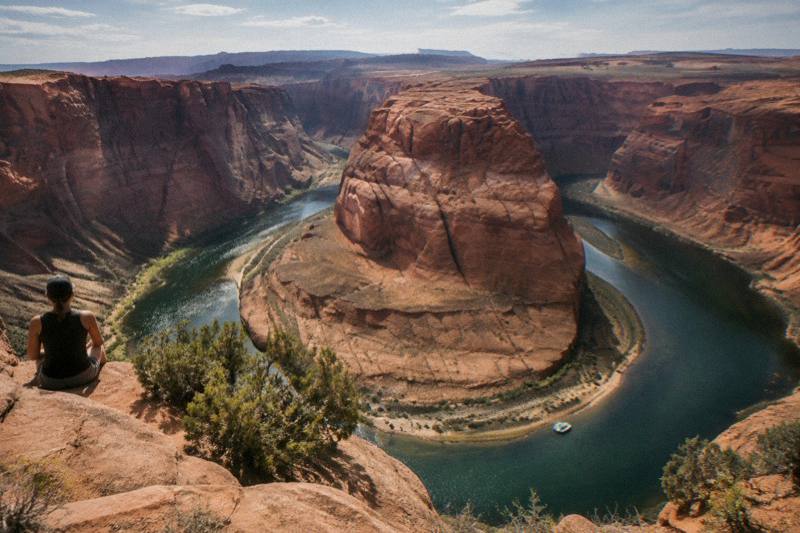
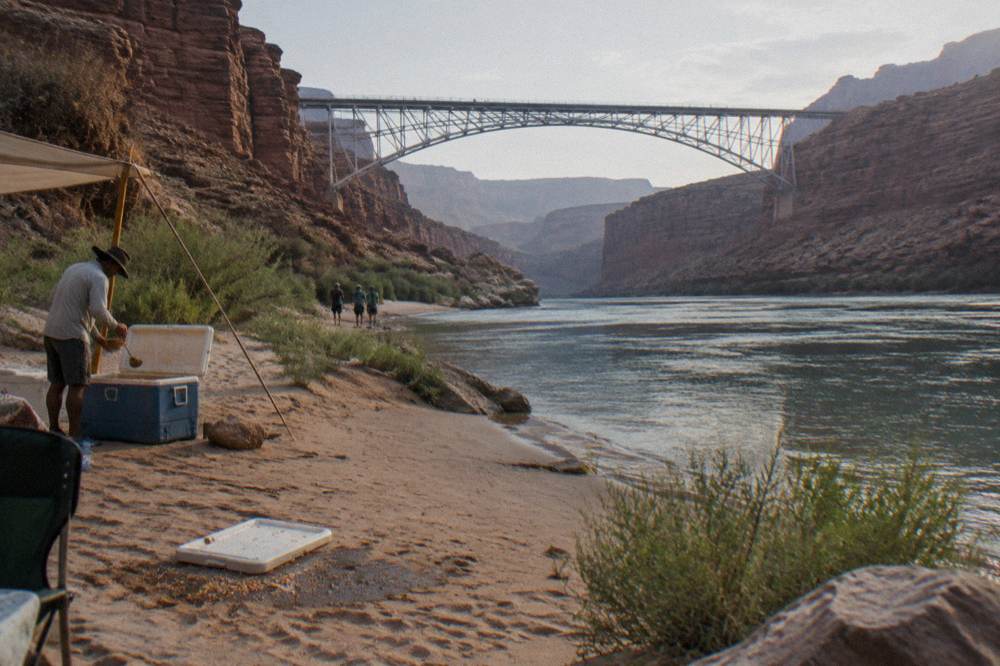
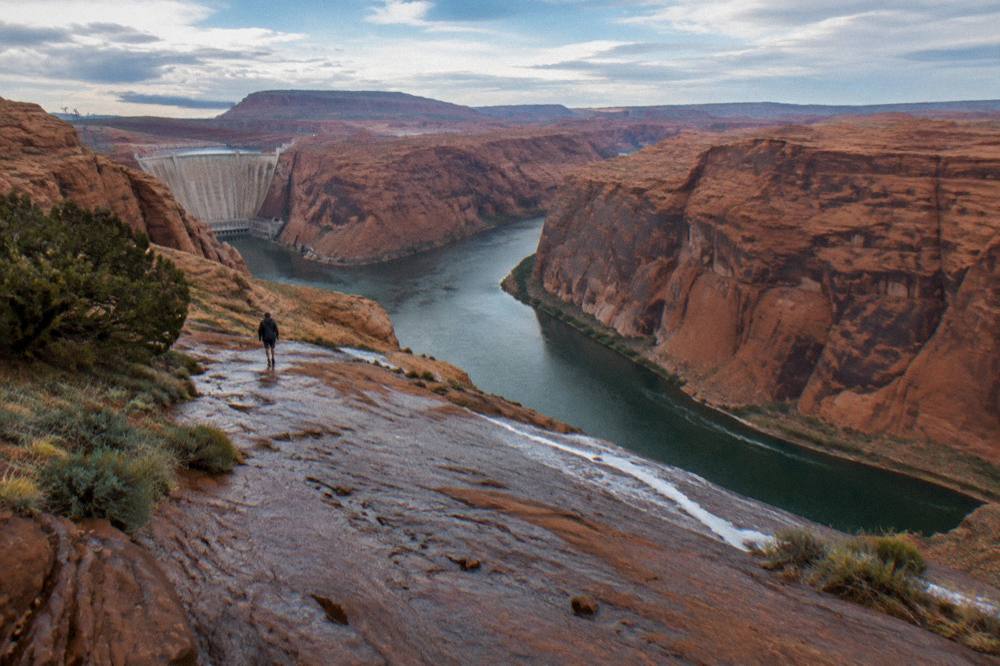
One point of honesty that saves confusion: the raft does not circle the famous horseshoe-shaped bend you see from the overlook. The float travels the river downstream of Glen Canyon Dam and passes through the canyon country around the bend's river level, and the overlook itself is a separate hike with its own parking lot and fee. Trip descriptions and photos on the listings show the river corridor and the sandstone walls, not the aerial horseshoe. Readers who want the postcard view still need the overlook, and readers who want the river need the float, and many people do both in one day. If you're also weighing Antelope Canyon against the overlook, our Horseshoe Bend versus Antelope Canyon comparison covers which stop earns its fee and how the float fits alongside both.
Where Does The Float Start And End?
The float starts at Lees Ferry, the river access point 42 miles from Page, after a bus ride of about an hour from the operator's headquarters at 199 Kaibab Road. It ends roughly 10 river miles downstream, with a return bus to Page. Total time is about 5 hours door to door from check-in. There is no hotel pickup listed, so guests drive or taxi themselves to the Page meeting point and arrive 45 minutes early.
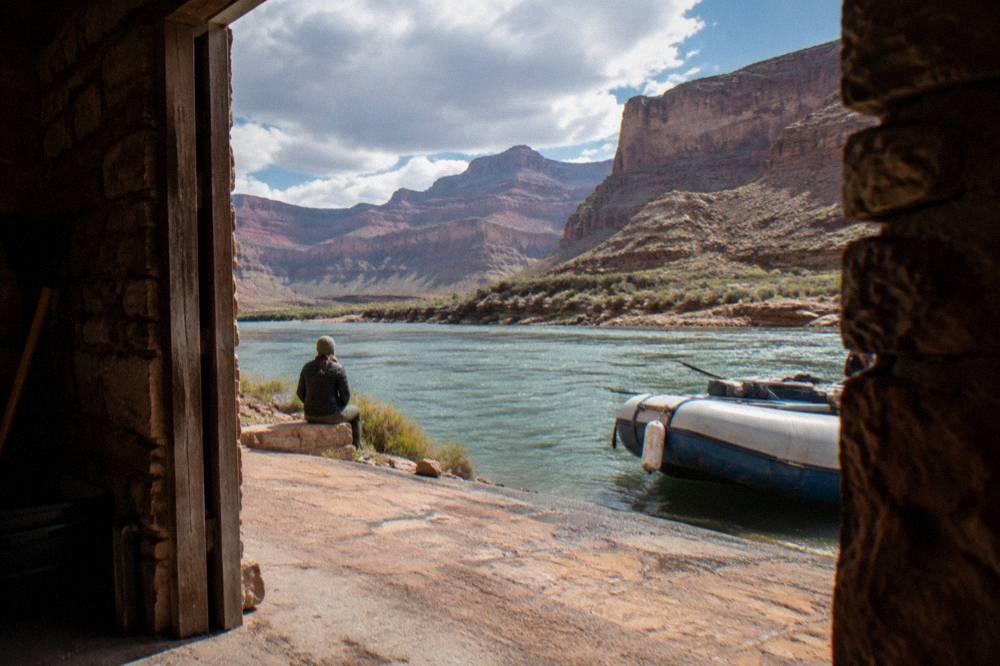
The logistics are simple by river-trip standards, which is part of the appeal. You drive to Page, you park at the headquarters, the operator handles everything on the water and the driving on either side of it. The bus ride to Lees Ferry is part of the experience for many guests, because the road drops into the canyon and delivers you to a launch point that most visitors never see. Lees Ferry is a historic crossing with a ranger station and a boat ramp, and it sits directly above the first rapid of the Grand Canyon, though this float stays well above that water.
The day breaks down roughly like this, based on the operator's published schedule and the trip listings:
| Segment | What happens | Rough timing |
|---|---|---|
| Check-in | Meet at 199 Kaibab Rd, Page | 45 minutes before departure |
| Bus to Lees Ferry | Scenic drive down to the river | About 1 hour |
| Safety talk and launch | Gear, life jackets, guide briefing | About 30 minutes |
| On the river | Motor raft through smooth water, about 10 river miles | About 3 hours |
| Take-out and return bus | Load up, drive back to Page | About 1 hour |
Two practical notes from the fine print. First, the operator notes the trip requires a minimum number of passengers to run, with figures of 8 or 12 mentioned across its pages, so a lightly booked departure can be consolidated or rescheduled. Second, private boaters on this same stretch need a free Lees Ferry Backcountry Permit, but guests on the commercial float ride under the concessioner's own authorization, so there is nothing to arrange yourself. If you were weighing a self-guided alternative, the permit is free but the shuttle logistics are entirely yours, which is why most people take the guided trip.
If this float sounds like the right fit, the two listings on this site are the natural starting point, alongside the most popular Black Canyon float for readers basing themselves in Las Vegas:
Horseshoe Bend Float Or The Overlook: Which Should You Do?
Choose the overlook if you want the famous view cheaply and quickly: it's a short walk from a paid parking lot to the cliff edge, costing $10 per standard vehicle, and it shows the horseshoe from above. Choose the five-hour guided float, from $149.51 per person, if you'd rather be inside the canyon the photos are taken from, and with a full day, most visitors can do both.
The overlook deserves its own sentence of honesty, because the two get conflated constantly. The City of Page operates the overlook parking lot, and its published rate is $10 per standard vehicle, with no national park passes accepted. The walk from the lot to the railing is over sandy ground with some uphill on the return, and there is no shade at the viewpoint, so water and sun protection matter in every season. The fee buys the viewpoint only, and it has nothing to do with the rafting trip's price or its booking.
The float, by contrast, is a river product. You spend hours on the water with a guide, drifting between canyon walls, with stops built into the trip and the operator's season schedule governing when it runs at all. The two listings of the trip on this site both carry a from-price of $149.51 per person, and the difference between them is not the river: it is the meal terms and the cancellation window, which the next section lays out side by side.
Readers planning a wider Page itinerary should also read the Glen Canyon float trip guide, which covers this stretch of river in more depth, and the one-day Grand Canyon rafting guide, which explains why this is the only one-day river trip tied to the park.
For anyone ready to lock in a date, the float's cancellation terms are among the friendliest on this site:
The Two Page Float Listings Compared
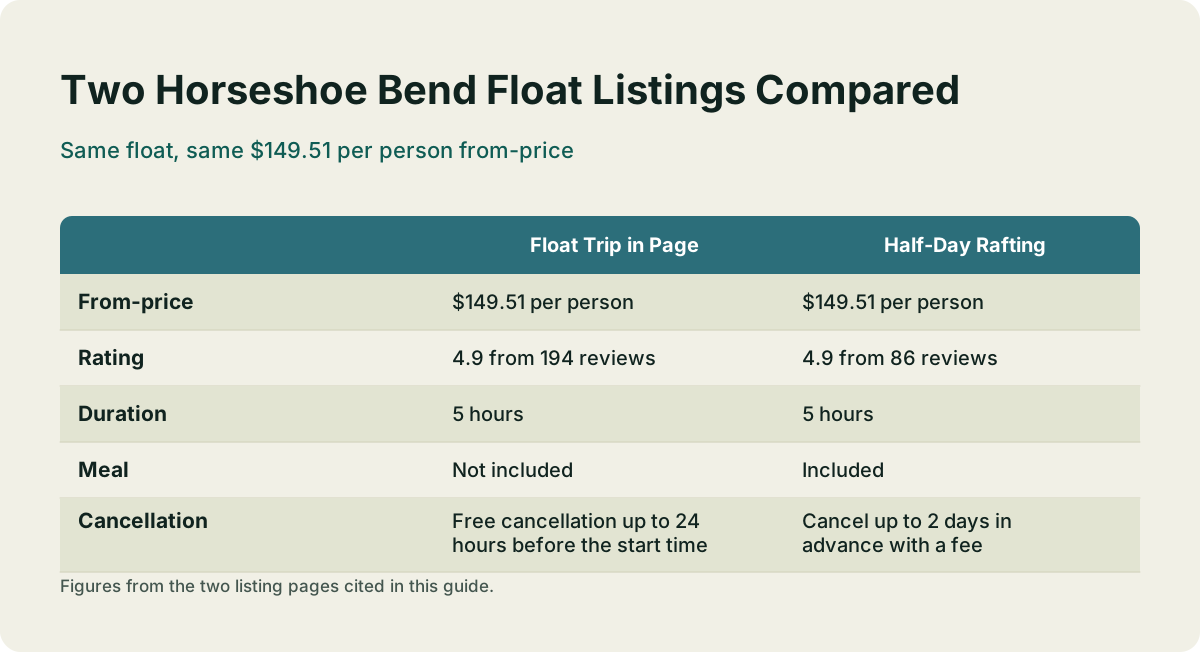
Both listings sell the same Wilderness River Adventures float at the same from-price of $149.51 per person, differing in only three ways: the meal, the cancellation window, and the review pool. One charges a fee to cancel up to 2 days in advance, while only the Wilderness River Adventures float offers free cancellation up to 24 hours before the start time, with both carrying a 4.9 rating from 86 and 194 reviews respectively.
Because the two listings describe one trip, the choice between them comes down to terms rather than experience. Here is the honest side-by-side, built from the listing data on this site:
| Horseshoe Bend Float Trip in Page | Page: Horseshoe Bend Colorado River Half-Day Rafting Trip | |
|---|---|---|
| Operator | Wilderness River Adventures | Aramark Destinations: Horseshoe Bend Rafting |
| From-price | $149.51 per person | $149.51 per person |
| Rating | 4.9 from 194 reviews | 4.9 from 86 reviews |
| Duration | 5 hours | 5 hours |
| Meal | Not included | Not included |
| Cancellation | Free cancellation up to 24 hours before the start time | Cancel up to 2 days in advance with a fee |
| Format | Smooth water, bus and motor raft | Smooth water, bus and motor raft |
Three honest readings of that table. The meal difference is real money on a family trip: if lunch is included, nobody is buying food in Page before a five-hour outing, and if it is not, plan for it. The cancellation difference matters for anyone with a loose itinerary, since the 24-hour window on the no-meal listing is the more forgiving of the two, while the meal-included listing asks for two days' notice and charges a fee. And the review pools differ in size but not in verdict: 4.9 from 194 reviews and 4.9 from 86 reviews are the same grade at different confidence levels. The rest of the planning pages sit on Grand Canyon Rafting Tours.
The reviews that exist are unambiguous. One guest review on the listing calls it "easy, informative, fun, and safe for all ages. Every part of it was a positive experience." Another review says "The scenery is stunning. The guides are super knowledgeable and friendly. It's just a great relaxing experience." Those two quotes, both five stars, describe exactly the product the operator advertises: a calm float with interpretation, not an adrenaline trip.
What The Season Schedule Looks Like
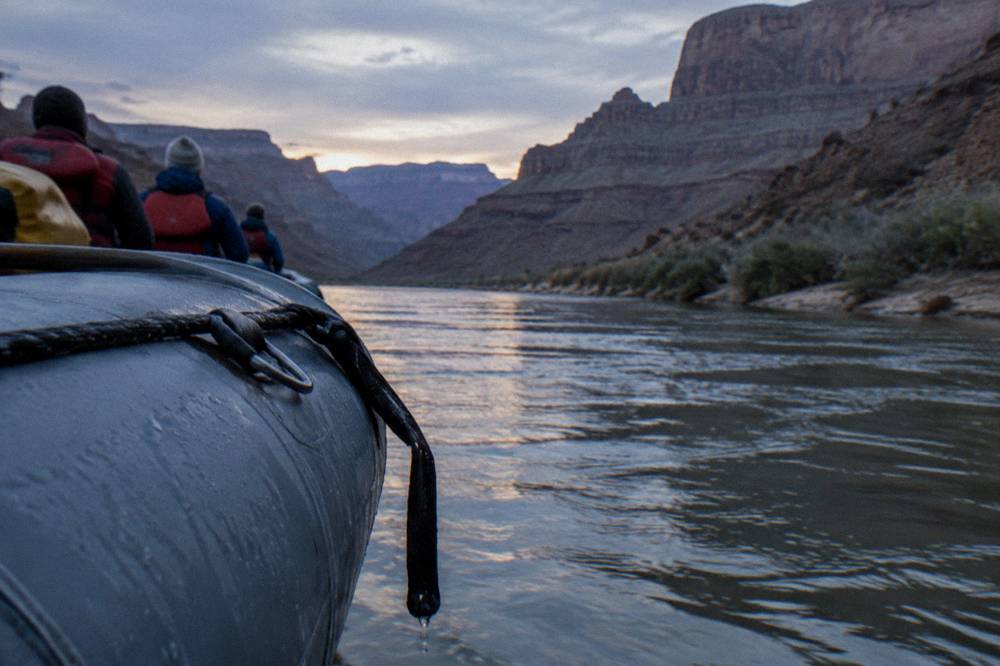
The 2026 season runs from March 1 to about November 3, with departure frequency changing through the year: one departure a day early and late in the season, and multiple daily departures from mid-May through September. Check-in is 45 minutes before departure, and the trip runs only within these windows, so shoulder-season travelers have fewer slots and should book earlier. The schedule is published by the operator and repeated on both listings.
The season windows come from the operator's own 2026 schedule, and they shape every other planning decision on this page:
| 2026 window | Departures |
|---|---|
| March 1 to May 15 | One departure per day |
| May 16 to May 31 | Multiple departures per day |
| June 1 to July 31 | Multiple departures per day |
| August 1 to September 30 | Multiple departures per day |
| October 1 to about November 3 | One departure per day |
What this means in practice: summer gives you flexibility on time of day but the fullest rafts and the hottest walk to and from the bus, while March, April, May and October give you one shot per day and cooler, quieter conditions on the water. The trip's minimum passenger count applies in every window, so the single daily departures in the shoulder months are the ones most likely to consolidate. Weather and water conditions always decide the day on any river trip, and the operator's pages are the place to confirm a specific date is running.
For readers matching a river trip to the right month, the best time to raft the Grand Canyon guide works through the whole corridor's seasons, including why this tailwater stretch runs on a different calendar from the whitewater trips downstream.
Cost, Ages And Fees For The Float
The float costs from $149.51 per person on both listings here, with the meal difference noted above. The minimum age is 4, and there is no rapid or swimming requirement, so the trip suits young families. The overlook parking fee, $10 per vehicle, is separate and optional. No national park entrance fee applies to the river trip itself, and the private-boater permit on this stretch does not apply to guided guests.
The money picture is straightforward, and it is worth laying out plainly because search results for this trip mix several numbers together:
| Item | Cost | Applies to |
|---|---|---|
| Float, either listing | From $149.51 per person | The rafting trip |
| Overlook parking | $10 per standard vehicle | The viewpoint only, optional |
| Lunch on the river | Included on one listing, not the other | Check the listing terms |
| Private boater permit | Free, self-serve | Private craft only, not guided guests |
On ages: the operator lists 4 as the minimum, and the reviews bear out the family claim. One guest review of the trip describes it as "affordable, informative, family friendly, entertaining and timely" and notes children playing in the water at a stop, though that review is attached to a Black Canyon listing rather than this one, so treat it as a signal about the guide style, not this specific trip. The honest framing on water: this is dam-controlled tailwater, cold year round at the source, and the operator decides when conditions allow swimming stops. No listing promises a swim.
One more fee note for completeness. Grand Canyon National Park's entrance fee, $35 per private vehicle for seven days, applies to the park proper, not to this float, which launches inside Glen Canyon National Recreation Area under the concessioner's operation. Guests combining the float with a South Rim visit on the same trip should budget both. The how much does Grand Canyon rafting cost guide puts every option on this site into one price ladder, from this float to the multi-day trips.
How The Float Compares With Other River Trips On This Site
The Page float spends longer on the water than the Black Canyon floats below Hoover Dam, running 5 hours from $149.51 versus 1.5 to 3 hours at $69 to $140. It is calmer and far cheaper than the West Rim whitewater day from $688.85, and it stands as the only river trip on this site that fits inside a single day.
Here is the honest ladder, using only the from-prices and durations printed on this site's listings:
| Trip | From-price | Duration | Water |
|---|---|---|---|
| Hoover Dam 1.5-Hour Float (Black Canyon) | $69 | 1 hour 30 minutes | Smooth |
| Horseshoe Bend Float Trip in Page | $149.51 | 5 hours | Smooth |
| 3-Hour Black Canyon Motorized Raft with Lunch | $140 | 3 hours | Smooth |
| Grand Canyon West Whitewater with Helicopter and Skywalk | $688.85 | 8 hours | Whitewater |
| 3-Day Grand Canyon Rafting and Helicopter Tour | $1855 | 3 days | Whitewater |
| 6-Day Motorized Raft Trip with Meals and Flight | $3420 | 6 days | Whitewater |
The Black Canyon floats are the natural comparison, because they are the same genre of trip: a guided, smooth-water motor raft below a major dam, sold to people staying in a nearby city. The 1.5-hour Hoover Dam float, 4.9 from 254 reviews at from $69, is the budget option and the shortest commitment, and one guest review says it offers "a great chance to see the Hoover dam from a different angle that most people don't get to see." The three-hour motorized raft with lunch, 4.8 from 413 reviews at from $140, is the closest match to the Page float on both price and time, with a review praising guides who "shared so much knowledge." If you are staying in Las Vegas, the Black Canyon is your river; if you are staying in Page, the Horseshoe Bend float is.
The West Rim whitewater day is a different animal. It is a true whitewater trip through the Grand Canyon itself, launching at Diamond Creek near Peach Springs, with a helicopter exit from the canyon floor and the Skywalk bundled in, from $688.85 per person, minimum age 8, season April through October. Guests who want rapids and have one day should read the Hualapai River Runners guide before choosing, because the two products share almost nothing except the word canyon.
And the multi-day trips are the real Grand Canyon river experience, 3 to 18 days through 226 river miles, reserved a year or more ahead. The two multi-day listings on this site, the 3-day camping trip from Las Vegas at from $1855 and the 6-day motorized trip from Page at from $3420, are both new listings with no reviews yet, so there is no rating history to lean on, only the operator's standing as an authorized park concessioner. For readers testing whether their family enjoys river days before committing thousands of dollars and a week of vacation, the Horseshoe Bend float is a reasonable rehearsal.
Whichever direction you take, the choice on this site comes back to the same three starting points:
Common Questions About Horseshoe Bend Rafting
Does the Horseshoe Bend rafting trip go through the famous bend?
The float travels the Colorado River between Glen Canyon Dam and Lees Ferry, about 10 smooth-water miles through the canyon country around the bend at river level. The aerial horseshoe view comes from the overlook, a separate hike with its own parking fee, and the two are different experiences that many visitors combine in one day.
How much does the Horseshoe Bend float cost?
Both listings of the trip on this site carry a from-price of $149.51 per person. Neither listing includes lunch, and one charges a fee unless you cancel up to 2 days ahead; the other excludes the meal and allows free cancellation up to 24 hours before the start time. The overlook parking fee of $10 per vehicle is separate and optional.
Are there rapids on the Horseshoe Bend rafting trip?
No. The stretch between Glen Canyon Dam and Lees Ferry is smooth water with no rapids, which is why the park service names these trips as its one-day river trips. Whitewater in the Grand Canyon proper requires the multi-day trips below Lees Ferry or the Hualapai one-day whitewater trip at the West Rim.
What is the minimum age for the Horseshoe Bend float?
The operator lists a minimum age of 4. The trip is a motor raft on flat water with a guide, no paddling or swimming requirement, and guest reviews describe it as suitable for all ages.
When does the Horseshoe Bend rafting season run?
The 2026 season runs from March 1 to about November 3. Early and late season carry one departure a day, while mid-May through September carry multiple daily departures. Check-in is 45 minutes before departure at the operator's Page headquarters.
Is the Horseshoe Bend float the same trip as the Glen Canyon float?
Yes, the names overlap. The Horseshoe Bend float is the half-day smooth-water trip on the Glen Canyon stretch of the Colorado River, and this site's Glen Canyon float guide covers the same water in more depth, including the Lees Ferry access and the free private-boater permit that guided guests do not need.