Glen Canyon Float Trip: Lees Ferry To Horseshoe Bend
The Glen Canyon float is the one raft trip near the Grand Canyon with no rapids at all: a five-hour, ten-mile drift from below Glen Canyon Dam to the sandbar below Horseshoe Bend, run by a single National Park Service concessioner out of Page.
Short answer
The Glen Canyon float trip is a smooth-water, five-hour motor raft trip on the Colorado River between Glen Canyon Dam and Lees Ferry, about ten river miles, run by Wilderness River Adventures from Page. Listings start from $149.51 per person, the minimum age is 4, and the 2026 season runs from March 1 to about November 3.
Most people who picture rafting near the Grand Canyon imagine whitewater. The Glen Canyon float is the opposite of that, and it is the better trip for a lot of travelers precisely because of it. This is the stretch of the Colorado River between Glen Canyon Dam and Lees Ferry, roughly the last calm water before the Grand Canyon proper begins, and the National Park Service is explicit that the park's only one-day river trips are the smooth-water floats run here from Page. Ten river miles, about five hours, no rapids, and a finish at the sandbar below Horseshoe Bend that most visitors only ever see from a thousand feet above. If you would rather drift this stretch in your own craft instead of joining a guided float, the guide to floating from Glen Canyon to Lees Ferry on your own explains the permit rule and the put-in details.
This guide covers what the trip actually is, what it costs, how the two listings on this site differ, and how the Glen Canyon float compares with the Black Canyon floats below Hoover Dam. The featured trip here is the Page: Horseshoe Bend Colorado River Half-Day Rafting Trip, the listing run by Aramark Destinations, and you can Check availability on its live listing at any time.
What Is The Glen Canyon Float Trip?
The Glen Canyon float is a guided, smooth-water motor raft trip on the Colorado River between Glen Canyon Dam and Lees Ferry, about ten river miles and five hours door to door, operated by Wilderness River Adventures out of Page. It is the only one-day river trip connected to Grand Canyon National Park, and it has no rapids at any point. If you'd rather trade flat water for real rapids, our comparison of upper and lower Grand Canyon rafting trips walks through how the two sections differ in time, cost, and who they suit.
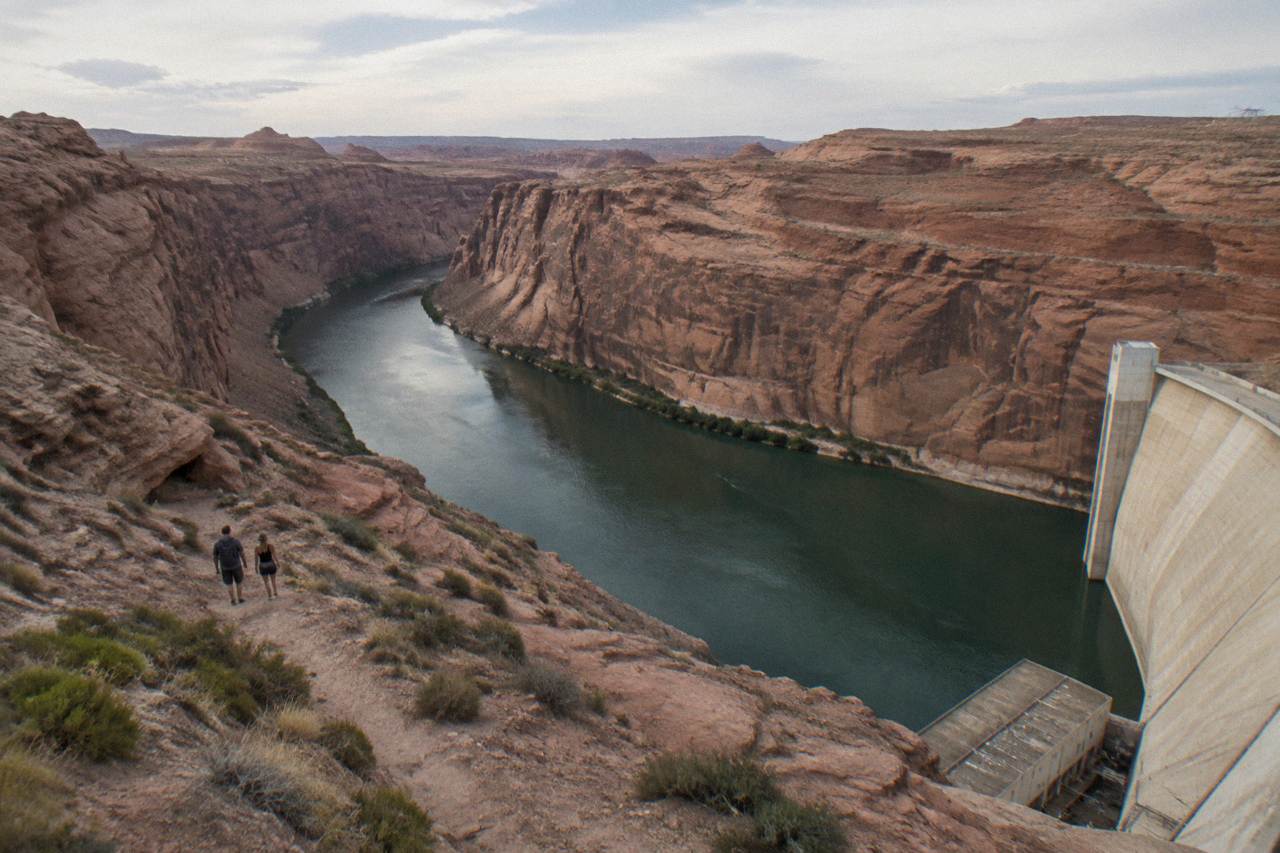
The geography matters more than most first-time visitors realize. Glen Canyon Dam holds back Lake Powell, and the river immediately below it runs clear, green and cold through a sandstone corridor before it reaches Lees Ferry, which the park describes as the only place in over 700 miles of canyon country where you can drive right down to the Colorado River. Lees Ferry sits at river mile zero of the Grand Canyon: downstream of it the rapids begin, upstream of it the water is calm. A float here puts you on the Colorado River in Glen Canyon, adjacent to the Grand Canyon but not inside its whitewater.
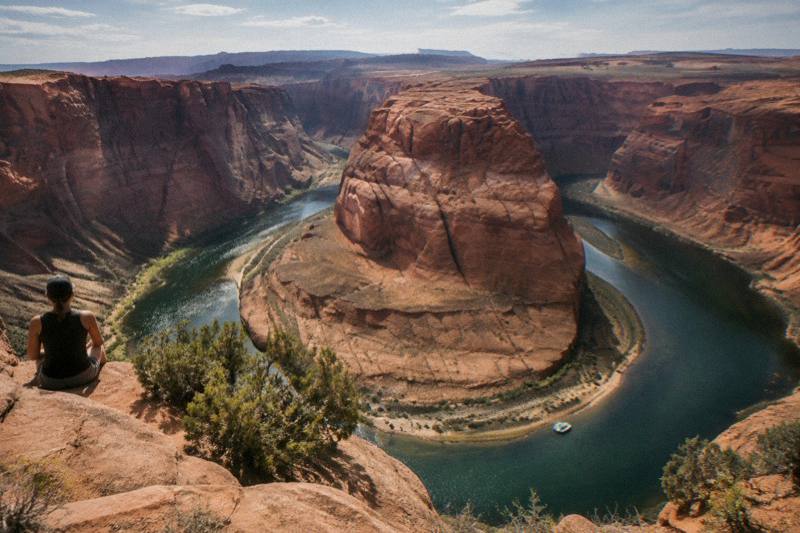
The trip works as a half-day loop. Guests meet in Page, ride a bus roughly an hour to the launch point below the dam, drift and motor downriver, stop at the sandbar across from Horseshoe Bend, then take a bus back to Page. The overlook above, the one in every photograph, is a separate hike reached by car; the float lands you at river level on the inside of the famous bend, a perspective the overlook crowd never gets.
Two listings on this site sell this same underlying trip: the Page: Horseshoe Bend Colorado River Half-Day Rafting Trip from Aramark Destinations, rated 4.9 from 86 reviews, and the Horseshoe Bend Float Trip in Page from Wilderness River Adventures, rated 4.9 from 194 reviews. Both start from $149.51 per person. They are the same river trip sold through different listing pages, so the choice between them comes down to what each listing bundles and what its cancellation terms say, not to any difference on the water.
Where Does The Float Start And End?
The float starts at a launch ramp below Glen Canyon Dam, reached by about an hour of bus travel from the meeting point in Page, and ends about ten river miles downstream at the sandbar across from Horseshoe Bend, with a return bus to Page. The park states that Lees Ferry sits 42 road miles from Page, and the operator's trips begin in Page with guests bused to the launch.
The launch itself is part of the experience. Glen Canyon Dam is a wall of concrete nearly in view of the start point, and the water coming out of it is the layer of Lake Powell released from depth, which is why the river here runs clear and cold rather than muddy. The first miles are narrow, tall-cliffed and quiet: no motors other than the raft's own, no rapids, and very few other craft outside the fishing boats near Lees Ferry.
The take-out is the moment most guests remember. The raft pulls onto a sandbar on the inside of Horseshoe Bend, the tight loop of the river that you have almost certainly seen photographed from the overlook a thousand feet above. From the water, the bend is a wall of curved Navajo Sandstone and a quiet beach; from the overlook, the people on the sandbar are the tiny dots that give the photo its scale. Doing both in one day, the float in the morning and the overlook at sunset, is the classic Page combination. If you're torn between that classic pairing and a slot canyon tour instead, our comparison of Horseshoe Bend and Antelope Canyon covers pricing, timing, and which option works better for families.
One planning note on the overlook: the Horseshoe Bend parking lot is operated by the City of Page and charges $10 per standard vehicle, and national park passes are not accepted there. It is a separate stop from the raft trip, so budget the fee and the short hike separately.
How Much Does A Glen Canyon Float Cost?
Both Page float listings start from $149.51 per person for the roughly five-hour trip, and the price you pay varies by date, option and group size, so the from-price is a floor rather than a quote. Neither the Aramark listing nor the Wilderness River Adventures listing includes a meal, so plan for lunch separately.
The two listings sit at the same from-price, which makes the comparison a question of inclusions and terms rather than cost. The Page: Horseshoe Bend Colorado River Half-Day Rafting Trip lists food and drinks as not included, and the Horseshoe Bend Float Trip in Page lists lunch as excluded, so on either listing you eat before the 45-minute early check-in or plan for food afterward in Page. Both include the bus from Page to the launch and back.
| Listing | Operator | From price | Duration | Meal | Rating |
|---|---|---|---|---|---|
| Page: Horseshoe Bend Colorado River Half-Day Rafting Trip | Aramark Destinations | from $149.51 | 5 hours | Included | 4.9 from 86 reviews |
| Horseshoe Bend Float Trip in Page | Wilderness River Adventures | from $149.51 | 5 hours | Not included | 4.9 from 194 reviews |
Cancellation terms differ, and this is where the fine print earns its keep. The Aramark listing states you can cancel up to 2 days in advance with a fee, while the Wilderness River Adventures listing states free cancellation up to 24 hours before the start time. If your Page plans are still loose, the shorter cutoff on the latter listing gives you more room to change your mind; if your dates are fixed, either works. Read the booking page for whichever you choose, because the terms belong to each listing rather than to the trip.
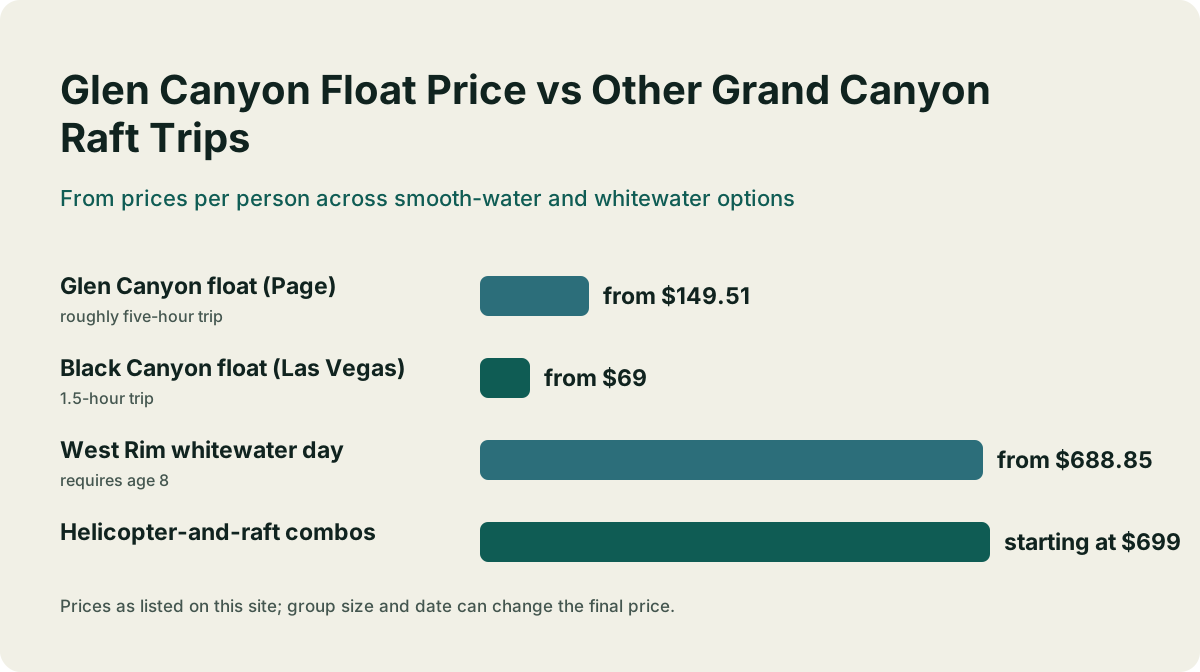
For budget context, a float here costs more than the shortest Black Canyon floats below Hoover Dam, which start from $69 per person for a 1.5-hour trip, but far less than the West Rim whitewater day at from $688.85 or the helicopter-and-raft combos starting at $699. The guide to Grand Canyon rafting costs breaks the whole price landscape down by category if you are comparing across trip types.
What Is The Trip Actually Like On The Water?
The on-water experience is about five hours total, of which roughly ten river miles are covered by a mix of motoring and drifting through flat, calm water with a guide narrating the geology and history. There are no rapids, no paddling required from guests, and the operator's schedule asks for check-in 45 minutes before departure in Page.
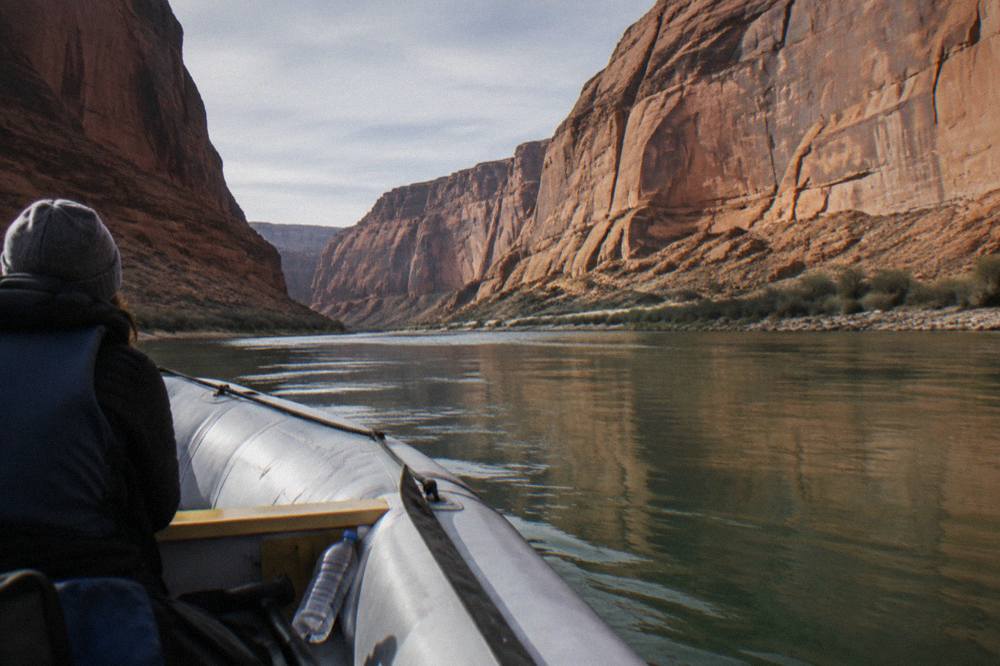
The rafts are motorized pontoons built for smooth water, not the big self-bailing whitewater rafts used downstream in the Grand Canyon. Guests sit on benches and benches with backrests, the guide handles the boat, and the pace is slow enough that the trip reads as a moving tour rather than an activity. Guides narrate the rock layers, the dam, the river's history and the occasional wildlife; reviews on the listings emphasize this. One guest review of the Horseshoe Bend Float Trip calls it "easy, informative, fun, and safe for all ages," and another says "the scenery is stunning. The guides are super knowledgeable and friendly. It's just a great relaxing experience."
The water itself deserves a sentence of honesty. The park notes that Lees Ferry is the put-in for the Grand Canyon's rapids, but the float's water comes from the bottom of Lake Powell and stays cold regardless of air temperature, and no verified seasonal temperature figure for this stretch is published, so do not plan on swimming as a feature of the trip. Wear layers you can shed: the canyon is cool in the dam's shadow in the morning and hot on the sandbar by midday.
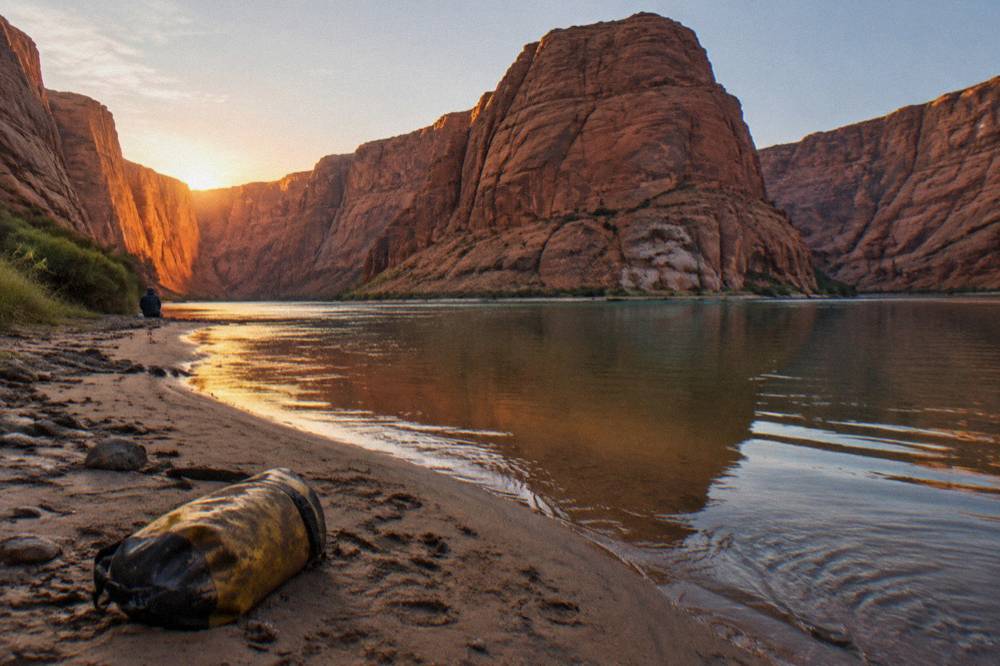
The stop at the sandbar lasts long enough to walk, take photographs and wade at the edge. This is the only point on the trip where you stand inside the bend itself, and it is the shot most guests came for. After the stop, the raft continues a short distance to the take-out near Lees Ferry and the bus returns to Page, with the whole loop landing at about five hours from check-in.
For families, the operator's minimum age is 4, which the listing and the operator's own page both state. That makes this one of the youngest-friendly river trips anywhere near the Grand Canyon: the West Rim whitewater day requires age 8, and the multi-day trips through the canyon itself are for older children and adults depending on the operator. The guide to Grand Canyon rafting with kids covers the age landscape across every category.
Glen Canyon Float Vs Black Canyon Float: Which Should You Pick?
If you are staying near Page or the Lake Powell area, the Glen Canyon float is the obvious pick; if you are based in Las Vegas, the Black Canyon floats below Hoover Dam are far closer and cheaper, starting from $69 per person. Both are smooth-water trips on the Colorado River, but they sit on opposite sides of the Grand Canyon and are not substitutes for each other in any sensible itinerary.
The two experiences rhyme. Both put you on flat, dam-controlled water in a scenic canyon with a guide narrating, both are family-friendly, and neither involves rapids. But the Glen Canyon float runs below Glen Canyon Dam and Lake Powell in Arizona's sandstone country, while the Black Canyon runs below Hoover Dam as part of Lake Mead National Recreation Area, and it is not the Grand Canyon at all, a distinction worth holding onto when a listing says "Grand Canyon" in its marketing.
| Glen Canyon Float (Page) | Black Canyon Float (Las Vegas) | |
|---|---|---|
| Water | Colorado River below Glen Canyon Dam | Colorado River below Hoover Dam |
| Character | Smooth water, no rapids | Smooth water, no rapids |
| Typical duration | About 5 hours | 1.5 to 6 hours depending on listing |
| From price | from $149.51 per person | from $69 per person |
| Minimum age | 4 | Not stated on the listings |
| Best base | Page or Lake Powell | Las Vegas |
The Black Canyon side of this site carries seven float listings, and the strongest reviewed is the Hoover Dam 1.5-Hour Raft Tour in Black Canyon, rated 4.9 from 254 reviews and starting from $69 per person. It is a short float with no transport and no meal, aimed at travelers who want the dam-from-below view without giving up half a day. A guest review calls it "an amazing tour and a great chance to see the Hoover dam from a different angle that most people don't get to see."
The longer Las Vegas alternative is the 3-Hour Black Canyon Motorized Raft Tour with Optional Transport, rated 4.8 from 413 reviews and starting from $140 per person, which adds a beach lunch and a swim stop and runs about six hours door to door with transport. Reviews on that listing praise the guides and the lunch in equal measure; one says "the lunch, view, and guide were well above expectations." If your trip is Las Vegas-centered and you want the closest thing to the Page float's rhythm, that three-hour motorized float below Hoover Dam is the match.
If you want actual whitewater instead, neither float is the right product. The one-day whitewater option near Las Vegas is the West Rim trip through the Hualapai River Runners operation, launching at Diamond Creek near Peach Springs with a helicopter exit, and the guide to Las Vegas whitewater rafting covers it in full.
When Does The Season Run And How Do You Book?
The 2026 float season runs from March 1 to about November 3, with a single departure a day at the shoulders of the season and multiple daily departures through the peak summer window. The minimum age is 4, check-in is 45 minutes early in Page, and the trip needs a minimum number of passengers to operate, so shoulder-season dates carry more schedule risk.
The season shape matters for planning. March and late October into early November give you cooler air, thinner crowds at Horseshoe Bend and one departure a day, which means one bad-weather cancellation can cost you the day. June through September run multiple departures, which gives you a fallback slot if the morning trip is scrubbed, but Page is hot and the overlook is at its most crowded. The operator's schedule is the source for exact departure times on your date, and the listing mirrors it.
Booking lead time is modest by Grand Canyon standards. The multi-day trips through the canyon proper are often reserved a year or two ahead, per the park's own guidance, but a half-day float is a different animal: peak summer weeks can sell out, yet shoulder-season dates are frequently bookable within a couple of weeks. If your dates are locked to a school-holiday week in July, book early; if you are flexible, you can afford to decide from Page.
Weather decides whether a trip runs, and no operator guarantees a departure. Wind on the open water, lightning, or dam operations can all change a day, and the listings' cancellation terms treat weather differently: the National Park Express half-day Black Canyon listing, for comparison, explicitly promises a full refund or a new date if it cancels for weather, while the Page float listings carry their own terms. The honest rule is simple: conditions change, read the listing's weather policy, and do not build a tight itinerary around a single departure.
For travelers who catch the river bug on the float, the step up is enormous and worth understanding early: the full canyon runs 226 river miles from Lees Ferry to Diamond Creek, the park authorizes 16 commercial companies to run 3 to 18 day trips on it, and those trips often reserve a year or two ahead. The multi-day Grand Canyon rafting guide covers that world, and the guide to Grand Canyon rafting permits explains the private-trip lottery if you would rather row it yourself.
What Should You Bring And Who Can Go?
Bring sun protection, layers, water and closed shoes you do not mind getting sandy; the minimum age is 4, and the trip is suitable for non-swimmers and travelers with no rafting experience because the water is smooth and the guide handles the boat. There is no paddling requirement on the motor rafts, and the check-in point in Page is a short drive from most lodging.
The packing list is short but the sun item is not optional. The canyon reflects heat off the walls, the sandbar has no shade, and one review of the three-hour Black Canyon float, a comparable smooth-water day, puts it plainly: "Wear sunscreen even if it is cloudy and cool." A hat, sunglasses with a strap and a refillable bottle cover most of it. Layers matter in the shoulder months when the morning bus ride and the dam-shadowed water are genuinely cold.
| Item | Why It Matters |
|---|---|
| Sunscreen and hat | Reflected sun off water and sandstone, no shade on the sandbar |
| Layered jacket | Cold morning air and cold dam-release water, spring and fall |
| Water shoes or sandals | Wet raft floor, sandy beach stop |
| Refillable water bottle | About five hours door to door in desert heat |
| Camera or phone with strap | The Horseshoe Bend sandbar is a photograph you cannot get elsewhere |
Who can go is broad. The minimum age of 4 is the operator's stated floor, and the reviews describe the trip as family-friendly across the board. There is no fitness requirement beyond stepping on and off the raft and a short walk on sand, and no rafting experience is expected or needed. Travelers who cannot swim should tell the guide at check-in; life jackets are provided and worn, as on any commercial river trip. If anyone in your group wants a more physical version of the same stretch, kayak alternatives exist on the smooth water near Willow Beach on the Black Canyon side, and the Emerald Cave kayak versus raft guide compares the formats honestly.
How Does The Float Fit Into A Page Or Grand Canyon Itinerary?
Most travelers pair the morning float with the Horseshoe Bend overlook at golden hour and a slot canyon visit the same day or the next, making Page a two-night stop between Las Vegas and the Grand Canyon's South Rim. The float needs about five hours including check-in, so it leaves room for one major land activity per day rather than two.
Page is small but it is one of the densest activity hubs in the Southwest. The float, the Horseshoe Bend overlook and the Antelope Canyon area slot canyons are the classic trio, and Antelope Canyon tours are widely sold but have no card on this site, so book those separately and read their terms carefully. The Antelope Canyon and Horseshoe Bend tour guide covers how the land pieces fit together.
The direction of travel usually decides everything. From Las Vegas, Page is a serious drive but a natural overnight between the Hoover Dam corridor and the South Rim, and the Grand Canyon day trip from Las Vegas guide maps the realistic options. From the South Rim, Page is the standard overnight add-on for travelers who want the river without committing to a multi-day whitewater trip.
The honest framing for first-time visitors, and the reason Grand Canyon Rafting Tours exists as a site at all: the Glen Canyon float is not the Grand Canyon. It is the calm water directly above it, run by the same concessioner family that runs trips inside the canyon, and it delivers the Colorado River, the sandstone and Horseshoe Bend at river level in five easy hours. For a lot of families and short-itinerary travelers, that is exactly the right amount of river.
Common Questions About The Glen Canyon Float Trip
Is the Glen Canyon float trip whitewater?
No. The float runs on the smooth water of the Colorado River between Glen Canyon Dam and Lees Ferry, and the park states these are smooth-water trips with no rapids. Whitewater in the Grand Canyon begins downstream of Lees Ferry.
How much does the Glen Canyon float cost?
Both Page float listings start from $149.51 per person, and the price varies by date, option and group size. Neither Page listing includes a meal.
How long is the Glen Canyon float trip?
About five hours total, from check-in in Page through the bus ride to the launch, roughly ten river miles on the water, the Horseshoe Bend sandbar stop and the return bus to Page. Check-in is 45 minutes before departure.
What is the minimum age for the Glen Canyon float?
The operator's minimum age is 4, which the listing and the operator's own page both state. That makes it one of the youngest-friendly river trips near the Grand Canyon; the West Rim whitewater day, for comparison, requires age 8.
When does the Glen Canyon float season run?
The 2026 season runs from March 1 to about November 3, with one departure a day at the shoulders of the season and multiple departures through the summer. The operator's schedule lists exact dates and departure times.
Can you see Horseshoe Bend from the raft?
Yes, from river level. The raft stops on the sandbar inside the bend itself, a perspective the overlook above cannot give you. The overlook is a separate stop with its own $10 per vehicle parking fee in the City of Page lot.