Grand Canyon Rafting Permits: Private Lottery Versus A Guided Trip
Only two realistic paths put a raft under you in the Grand Canyon: win a spot in the park's private permit lottery, or buy a seat on a guided commercial trip. One costs a few hundred dollars in fees and a lot of patience, the other costs real money and still needs a year or more of planning.
Short answer
Private Grand Canyon rafting permits are distributed through a weighted lottery run by the National Park Service: applications open in February, and 478 permits are available for the 2027 launch year for trips of 12 to 25 days. Fees run from a $25 application to a $90 river permit per person. Guided trips skip the lottery but often book one to two years ahead.
Every whitewater mile of the Colorado River inside Grand Canyon National Park sits behind a permit system. The National Park Service allows exactly two ways in: a private, noncommercial permit won through a weighted lottery, or a seat on a trip run by one of the 16 authorized commercial river companies. There is no third door, no walk-up option, and no operator that can legally take you down the full canyon corridor without falling into one of those two categories. If you've never run a river before, our beginner's guide to choosing a Grand Canyon rafting trip helps you weigh the lottery against a guided seat.
The choice between them is less about money than most people assume and more about time, effort and appetite for logistics. A private permit costs a few hundred dollars per person in park fees but demands that you organize your own equipment, food, rescue skills and river leadership for a trip of one to three weeks. A guided trip costs thousands per person, and the park's own planning pages note that commercial trips are often reserved a year or two in advance, but the operator handles nearly everything from sleeping bags to satellite phones.
This guide walks through both paths with the real numbers: what the lottery charges, when it opens, how many permits exist, what guided trips listed here cost, and which option fits which kind of traveler. Readers weighing the lottery against a guided trip usually end up buying the guided trip, and the reasons why are worth understanding before either checkbook or lottery application comes out.
How Does The Private Grand Canyon Rafting Permit Lottery Work?
The private permit system is a weighted lottery run each February by the National Park Service, open to applicants 18 and older, with applications accepted during the first three weeks of February and results announced by the end of the month. For the 2027 launch year, 478 permits are available for self-guided river trips lasting 12 to 25 days. Winning does not guarantee a launch date, it awards the chance to pick one from what remains.
The lottery exists because demand for private launches far exceeds the river corridor's capacity. The park caps launches at specific dates and locations to protect the canyon's campsites and the experience itself, so the weighted lottery distributes those scarce launch slots. The weighting rewards people who have applied and lost before, and who have not recently won, which is why many applicants enter several years in a row before their name comes up. The park publishes the full mechanics, including the weighting formula and follow-up lotteries for unfilled slots, on its weighted lottery page.
What winning actually gets you is a launch date at Lees Ferry and the right to run 226 river miles through the canyon to the Diamond Creek or Pearce Ferry area, depending on your trip length. What it does not get you is a raft, gear, food, or a guide. Private permit holders supply everything themselves, including the river experience the park expects trip leaders to hold. The park's commercial concessioner framework, described on the river concessioners page, is the parallel system: 16 companies hold contracts effective through the end of 2033 to run guided trips on the same stretch of water.
| Lottery step | What happens | What it means for you |
|---|---|---|
| Main lottery application | First three weeks of February, once per launch year | One $25 application covers the whole launch year |
| Results | Announced by end of February | Winners pick from remaining launch dates |
| Permit fees on winning | $90 river permit per participant | Paid per person, not per trip |
| Trip deposit | $200 for a small trip, $400 for a standard trip | Applied to the final cost |
| Entrance fee | $20 per participant aged 16 and older | Standard park entrance, 7 days |
| Late additions | $100 per participant added after the deadline | Discourages roster changes post-draw |
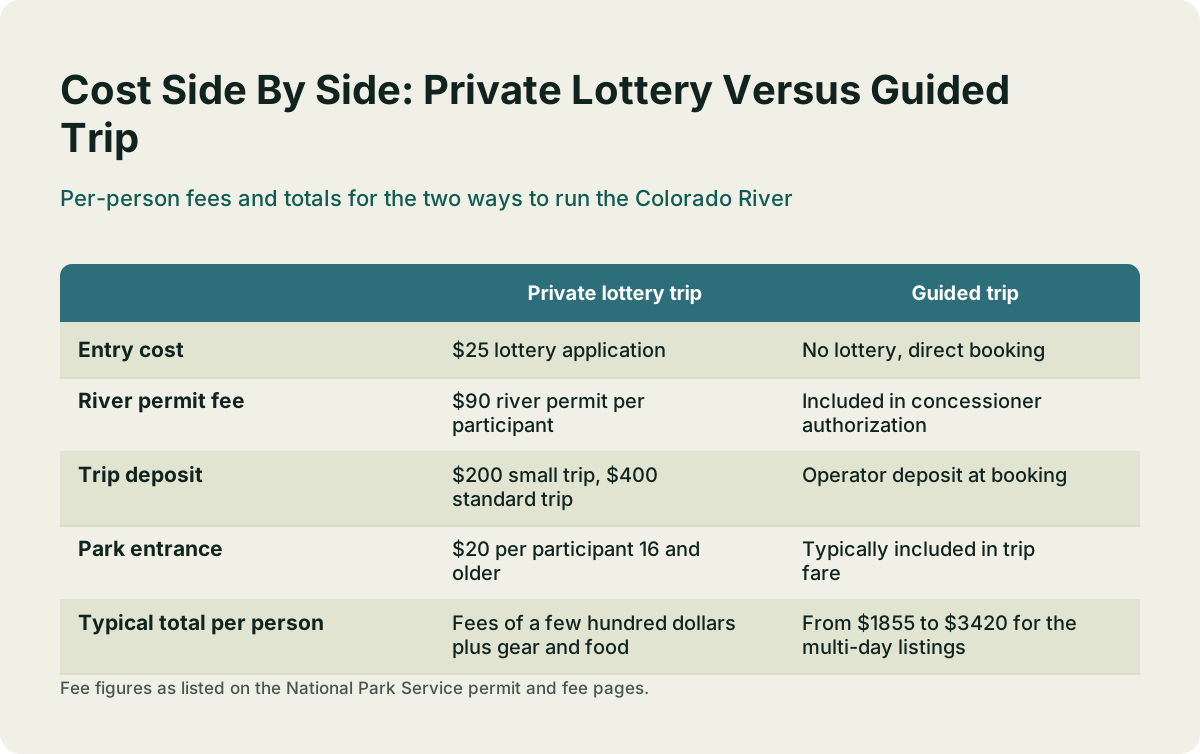
The fee table above is the complete cost picture for the permit itself. None of it covers equipment, food, shuttles or the emergency support a private trip needs to arrange. Those costs, spread across a group, are where the "cheap" private trip starts to close the gap with a commercial one, sometimes past it for small groups renting full gear packages.
What Are Your Real Odds And Obligations If You Win?
The park does not publish a simple win rate, but the structure tells the story: 478 permits for the 2027 launch year against thousands of annual applicants, with weighting that favors repeat applicants who keep entering. A win obligates you to run a 12 to 25 day self-guided trip, supply all equipment and food, and carry the river skills the park expects of a private trip leader.
The trip length is the part that surprises people. The lottery is not for weekend floats. Permits cover expeditions of 12 to 25 days on the water, which means committing close to a month of your life, arranging shuttles at both ends, and feeding a group for the duration. The park's noncommercial rules also require that winners actually use the permit or forfeit it, and the Diamond Creek take-out involves a separate Hualapai Tribe fee and advance permit for that segment of the river.
The obligations explain why so many lottery entrants are experienced river runners. A private Grand Canyon trip is one of the most demanding self-guided expeditions in American paddling, and the park treats it that way. If you have never run multi-day whitewater, the private permit path is not a shortcut to the canyon, it is a multi-year project whose final act is the river itself. If you want to see what your chances actually look like, our breakdown of Grand Canyon river permit odds walks through the lottery calendar, the fees, and the guided option that skips the wait entirely.
For everyone else, the guided path exists, and it is not a consolation prize. It is the way the overwhelming majority of people ever see the river from water level, and it comes with guides, meals, gear and a schedule you can plan a vacation around.
What Does A Guided Grand Canyon Trip Actually Give You?
A guided trip buys you a seat on a licensed commercial expedition: 3 to 18 days on the river with one of the park's 16 authorized companies, with meals, camping gear, safety equipment and experienced guides included. Trips start at Lees Ferry and cover the same 226 miles a private permit covers, but the operator handles logistics, food and river leadership, and you handle showing up on time.
The commercial system is deliberately parallel to the lottery. Same river, same rapids, same campsites, same take-outs. The difference is who carries the responsibility. On a private trip, that is you and your group. On a commercial trip, the concessioner's guides read the water, run the kitchen, rig the boats and manage emergencies. That is also why commercial trips cost what they cost: you are paying for decades of accumulated river expertise and a full expedition infrastructure, not just a boat ride.
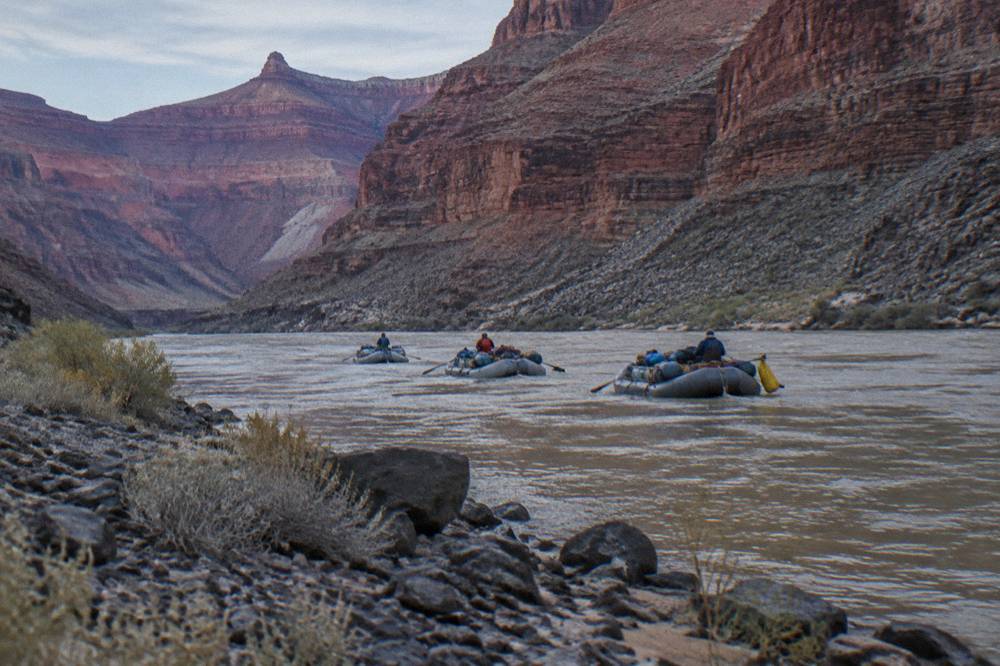
Booking one takes patience too. The park's guided tours page states plainly that commercial trips are often reserved a year or two in advance, so the guided route trades lottery luck for calendar discipline. The trips listed on this site sit in that framework: multi-day motorized expeditions, a 3-day camping trip with helicopter access, and shorter options for travelers who cannot commit a week or more. If a full-canyon expedition is the goal, the multi-day Grand Canyon rafting trips overview breaks down how the longer expeditions are structured.
The three options above span the realistic guided spectrum: the 6-day motorized trip from $3420 per person covering the heart of the canyon with meals and a flight included, the 3-day camping trip from $1855 per person running the river with a helicopter component, and the one-day West Rim whitewater trip from $688.85 per person for travelers who want whitewater and a helicopter exit inside a single day. Both multi-day listings are new listings with no reviews yet, so the booking pages are the source for current dates and availability.
What Does Each Path Cost Side By Side?
Counting everything, a private permit costs a few hundred dollars per person in park fees plus your own gear, food and logistics, which can total thousands per person for a rented-out expedition. A guided trip costs from $1855 to $3420 per person for the multi-day listings here, all-inclusive of meals and equipment. The private route is cheaper only if you already own the expedition infrastructure.
The honest comparison has to include what the fees leave out. A private group of twelve renting rafts, kitchen gear, sleeping kits and dry bags, buying three weeks of food and paying shuttle drivers at both ends will spend a sum that, divided across the group, lands in the same territory as a commercial fare, without the guides. The commercial fare looks expensive until you price what it replaces. The full index of guides sits on Grand Canyon Rafting Tours.
| Cost item | Private lottery trip | Guided commercial trip |
|---|---|---|
| Entry cost | $25 lottery application | No lottery, direct booking |
| Permit fee | $90 river permit per participant | Included in concessioner authorization |
| Deposit | $200 small trip, $400 standard trip | Operator deposit at booking |
| Entrance | $20 per participant 16 and older | Typically included in trip fare |
| Equipment | Self-supplied or rented | Included |
| Meals | Self-planned and packed | Included on the trips listed here |
| Guides and safety | Self-organized river leadership | Professional guides throughout |
| Typical total per person | Fees of a few hundred dollars plus gear and food | From $1855 to $3420 for the multi-day listings |
One more fee belongs on any Grand Canyon budget regardless of path: park entrance. The park's fee page lists $35 per private vehicle for a 7-day pass, $30 per motorcycle and $20 per person entering on foot or by bike, and non-US residents aged 16 and older pay an additional $100 per person unless they hold a qualifying annual pass. The details are on the park fees page.
The 6-day motorized trip is the clearest guided counterpart to a lottery expedition: it covers a substantial canyon section, includes meals and a flight, and departs from Page. Full details and current dates are on the 6-day motorized raft trip page, and you can Check availability at the operator's live listing. It is a new listing with no reviews yet, so the listing itself is the best source for what each departure includes.
Can You Get On The Water Without A Permit Or A Week To Spare?
Yes, in specific places. The one-day river trips the park recognizes are the smooth-water Lees Ferry floats from Page, which ride a concessioner's authorization rather than a private permit. Below Hoover Dam, Black Canyon floats run on a separate National Water Trail in Lake Mead National Recreation Area, outside the Grand Canyon permit system entirely. Neither involves the lottery.
The park's one-day river trip page is explicit that the only one-day river trips in Grand Canyon National Park are the smooth-water half-day and full-day trips between Glen Canyon Dam and Lees Ferry, run by Wilderness River Adventures with bus transport from Page. These are gentle floats on flat water, roughly 10 river miles over about 5 hours, with no rapids, open to children as young as 4. They are the only way to touch Colorado River water inside the park's boundaries without a permit or a multi-day commitment. For whitewater and real rapids, the upper versus lower canyon comparison helps you pick which stretch of the Colorado to raft.
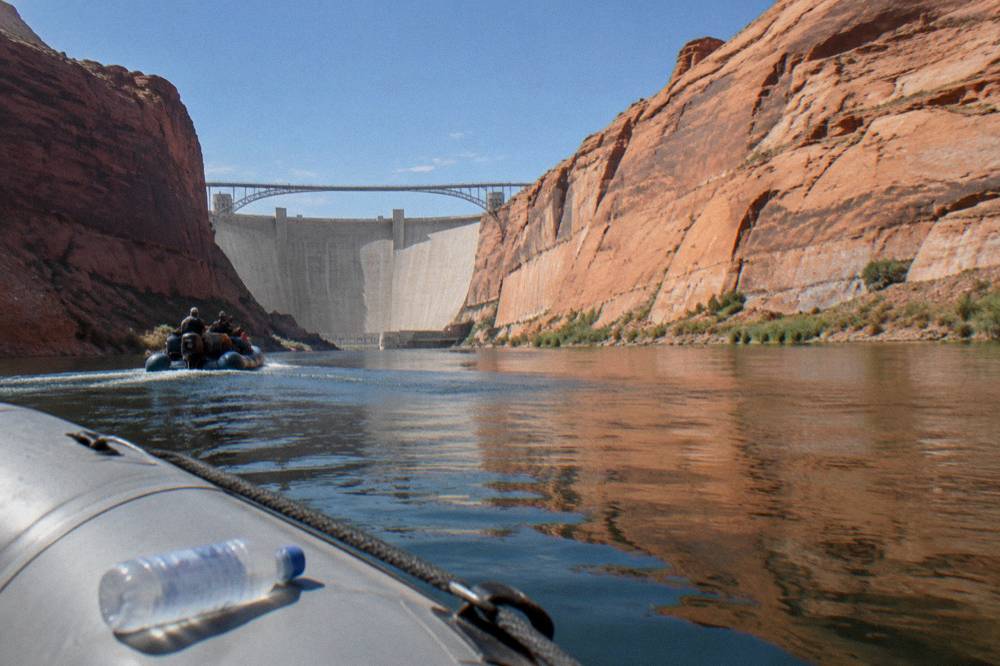
The Horseshoe Bend float trip in Page, from $149.51 per person, is the listing version of that concessioner float: a 5-hour smooth-water trip with a 4.9 rating from 194 reviews, bus transfer to Lees Ferry included, and a review from Donna R calling it "easy, informative, fun, and safe for all ages." It is the practical answer for families and time-pressed travelers who want river time in the Glen Canyon reach without any permit conversation at all. The Glen Canyon float trip guide covers how that stretch works in detail.
Black Canyon, below Hoover Dam, is a different waterway with different rules. It sits inside Lake Mead National Recreation Area, not Grand Canyon National Park, and its 30-mile National Water Trail runs on commercial outfitter permits rather than the Grand Canyon lottery. Launching directly at the dam is restricted to a limited number of permitted vendors, with guests escorted in by narrated bus through the dam's security zone. The three-hour motorized raft tour with lunch, from $140 per person with a 4.8 rating from 413 reviews, is the most-booked version of that experience, and one guest, Kristie C, described the shorter dam float as "affordable, informative, family friendly, entertaining and timely." The Hoover Dam rafting guide explains the full range of floats there.
How Far Ahead Should You Apply Or Book?
Enter the lottery in February for a launch date one to two years out, and book a guided trip on roughly the same horizon, since the park states commercial trips are often reserved a year or two in advance. Shorter options, the one-day floats and Black Canyon trips, book on normal vacation timescales of weeks or a few months. The longer the trip, the earlier the calendar matters.
The symmetry is the useful insight: both paths demand long lead times, so the decision between them cannot be deferred until the last minute. A traveler who decides in March that they want to run the canyon next spring has, in practice, already missed the main lottery window and is choosing among whatever guided departures still have seats. That is not a failure of planning, it is just how the river works.
| Trip type | When to commit | Why the lead time |
|---|---|---|
| Private lottery trip | Apply February, launch 1 to 2 years later | 478 permits, weighted draw, 12 to 25 day trips |
| Multi-day guided expedition | Book 1 to 2 years ahead | Park states commercial trips often fill that far out |
| West Rim one-day whitewater | Book weeks to a few months ahead | Season runs April to October, single-day commitment |
| Page smooth-water float | Book weeks ahead | Season runs early March to early November, daily departures |
| Black Canyon float from Las Vegas | Book days to weeks ahead | Year-round paddling, cold water in the low 50s F |
Season matters on top of timing. Commercial river trips run April through October, the Hualapai one-day whitewater season runs April to October with a minimum age of 8, and the Page float season runs from early March to early November. Winter travelers are not shut out of the water entirely: Black Canyon paddling runs year-round, with dam-release water holding in the low 50s F in every month. The best time to raft guide sorts the seasons month by month.
Which Path Fits Which Traveler?
Choose the lottery if you are an experienced river runner with a standing group, your own gear and schedule flexibility measured in years. Choose a guided trip if you want the canyon without the expedition overhead, are new to whitewater, or are traveling with family. Choose a one-day float if your interest is river scenery rather than the full corridor, or if the calendar has already beaten you to both long-lead options.
The decision rarely comes down to money alone. It comes down to whether the logistics are the point or the obstacle. For a subset of river runners, rigging boats and reading water with friends is the whole appeal, and the lottery exists for them. For everyone else, the concessioner system delivers the same canyon with the work removed, and the price of a guided seat buys back weeks of planning labor.
| If you are... | The right path | First step |
|---|---|---|
| An experienced multi-day river runner | Private lottery | Apply in February on the park lottery page |
| A first-timer wanting the full canyon | Guided multi-day trip | Check dates on a 3 to 6 day listing |
| A family with school-age kids | Guided trip or one-day float | Check minimum ages: 4 on the Page float, 8 on the West Rim day |
| A Las Vegas visitor with one free day | Black Canyon float or West Rim whitewater day | Book either on normal vacation timing |
| A traveler who missed the lottery window | Guided trip, next year's lottery | Book a guided seat and apply in February anyway |
For travelers whose interest is the canyon's scenery rather than its whitewater, a helicopter and river combination splits the difference: the Grand Canyon Helicopter Tour and River Raft or Emerald Cave Kayak option, from $699 per person with a 4.6 rating from 267 reviews, pairs a canyon flight with river time in a single 11-hour day from Las Vegas. It is not a substitute for a multi-day expedition, but it delivers both perspectives of the canyon in a format that needs no permit and no lottery, which is exactly why it appeals to people who discover the permit system after the deadlines have passed.
There is no wrong answer between the lottery and the guided trip, only mismatched ones. Applying for a permit without the river skills to use it wastes years of lottery weighting. Booking a 6-day expedition when a 5-hour float would have satisfied the itch wastes thousands of dollars. Match the path to the traveler, not to the brochure.
Common Questions About Grand Canyon Rafting Permits
How hard is it to get a permit to raft the Grand Canyon?
The private permit lottery is genuinely competitive: 478 permits are available for the 2027 launch year for trips of 12 to 25 days, against thousands of annual applicants. The weighted draw favors repeat applicants who keep entering, so many people apply several years in a row before winning.
How much does a Grand Canyon rafting permit cost?
The private lottery charges a $25 application, a $90 river permit per participant, a $200 or $400 trip deposit depending on trip size, a $20 entrance fee per participant aged 16 and older, and a $100 late-add charge for participants added after the deadline. Equipment, food and shuttles are separate and self-arranged.
When can I apply for the Grand Canyon river lottery?
Applications are accepted during the first three weeks of February each year, once per launch year, with results announced by the end of February. Applicants must be 18 or older.
Can you raft the Grand Canyon without a permit?
Not through the full canyon corridor. The only permit-free river experiences touching this system are the concessioner-run smooth-water floats from Page on the Glen Canyon reach, the Black Canyon floats below Hoover Dam in Lake Mead National Recreation Area, and the Hualapai one-day whitewater trip at the West Rim, each operating under its own commercial authorization.
Do guided Grand Canyon rafting trips need permits too?
Yes, but the operator holds them. The park's 16 authorized commercial companies operate under concessioner contracts running through the end of 2033, so a guest on a guided trip never touches the lottery. The trade-off is booking lead time: the park states commercial trips are often reserved a year or two in advance.
What is the shortest way to get on Colorado River water near the Grand Canyon?
The 1.5-hour Hoover Dam float in Black Canyon, from $69 per person, is the shortest listed option. Inside the park's boundaries, the 5-hour smooth-water float from Page is the shortest river trip available, with a minimum age of 4.