How Difficult Is Rafting The Grand Canyon?
A difficulty ladder for Grand Canyon river trips: smooth-water floats, the West Rim whitewater day, and multi-day expeditions, matched to fitness and nerve.
How Difficult Is Rafting The Grand Canyon?
Rafting the Grand Canyon is not one difficulty level but three. Smooth-water floats below Glen Canyon Dam and Hoover Dam require no paddling fitness at all and take children as young as four. The West Rim one-day whitewater trip is a genuine but manageable adventure with a minimum age of 8. Full canyon multi-day expeditions, three to eighteen days with the 16 authorized concessioners, are the serious tier and reward real physical preparation. Since the toughest tier depends on how many days you can commit to the river, our guide to choosing a Grand Canyon rafting trip length compares what each option costs and delivers.
That spread surprises people. Search for "Grand Canyon rafting" and the results mix a half-day family float near Page with a two-week expedition through the heart of the canyon, as though they were the same product. They are not. The effort gap between them is roughly the gap between a scenic boat ride and a backcountry trek, and the first job of this page is to sort which one you are actually asking about.
The difficulty question also has a hidden variable: how much of the work the raft does for you. Nearly every commercial trip here uses motorized or oar-powered rafts rowed by a guide, so guests mostly hold on and ride. Paddle rafts, where guests stroke through rapids under a guide's commands, exist on some multi-day trips, but the listings on this site, from the Las Vegas floats to the West Rim whitewater day, put the guide at the controls. That changes the difficulty calculus from "can I power this boat" to "can I sit, brace, and follow instructions."
One more framing point before the ladder. Water conditions, dam releases and weather decide any given day on the river, and no operator or park page guarantees rapids, wildlife or that a trip will run as scheduled. What follows is the effort each trip type asks for, as the listings and official pages state it, not a promise of conditions on your date.
If you already know roughly which tier fits, the three cards below span the whole ladder: the West Rim whitewater day, an easy Black Canyon float, and a six-day motorized expedition.
How Hard Is The Whitewater Day At Grand Canyon West?
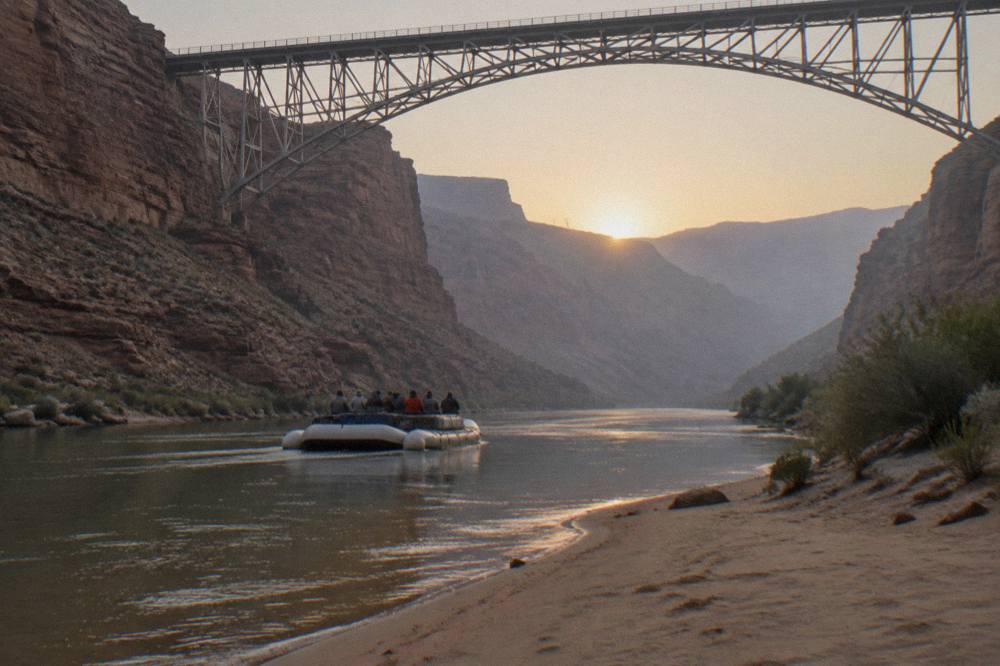
The Grand Canyon West whitewater day is moderately demanding but beginner friendly: a motorized raft takes you through rapids and calm stretches on the Colorado River, the minimum age is 8, and the exit is a helicopter flight from the canyon floor to the rim. No rafting experience is expected, and lunch on a sandy beach is built into the day. The trip launches at Diamond Creek near Peach Springs, roughly two hours by road from Grand Canyon West. If you're wondering whether beginners can eventually handle bigger whitewater, our beginner's guide to Class IV rapids gives you a straight answer.
This is the only one-day whitewater product on this site, and it occupies a useful middle rung. The operator is Grand Canyon Resort Corporation, and the listing bundles transport from Hualapai Lodge, lunch, the helicopter exit and the Skywalk All-Access Pass, from $688.85 per person. Guests ride a motorized raft through rapids and calm stretches, with an optional guided hike to Travertine Cavern Falls and cultural interpretation by Hualapai guides, as the operator's page describes. The rating stands at 5 from 4 reviews, a small pool, so treat it as a handful of happy guests rather than a settled verdict.
Physically, the day asks for moderate stamina more than strength. You board and exit the raft, brace through splashes, and if you take the optional hike you spend time on uneven desert terrain. The official season runs April through October, and summer heat in the canyon is a real factor; heat, not the rapids, is what wears most people out. The park-facing pages for the Hualapai operation state the minimum age of 8 plainly, which tells you the operator considers the rapids manageable for school-age children in a guided motor raft.
For readers comparing difficulty against price and time, here is where the one-day whitewater options sit.
| Trip | Format | Effort stated by listing | Minimum age | From price |
|---|---|---|---|---|
| Grand Canyon West: Whitewater Rafting, Helicopter & Skywalk | Motorized whitewater, guided | Ride-along rafting, optional hike, 8 hours | 8 (per operator pages) | $688.85 per person |
If a full whitewater day sounds right, the details, including the helicopter exit and what the Skywalk pass adds, are on the Grand Canyon West whitewater tour page.
Are The Smooth-Water Floats Difficult At All?
No, the smooth-water floats are not difficult. The half-day Page trip between Glen Canyon Dam and Lees Ferry and the Black Canyon floats below Hoover Dam run on flat water with no rapids, the Page float admits children as young as 4, the rafts are motor or guide-rowed, and the main physical asks are boarding the boat and a bus ride to the launch. If you'd rather trade the flat water for real rapids, our guide to finding true whitewater rafting near Las Vegas explains how the Black Canyon float compares to a genuine whitewater day trip.
Start with Page, because it is the only one-day river trip inside Grand Canyon National Park's own description. The National Park Service states that the one-day option is the smooth-water Lees Ferry floats beginning in Page, with guests bused to the launch. The trip runs about 5 hours covering roughly 10 river miles, on water with no rapids, and the 2026 season runs from March into early November. The listing sold here, the Horseshoe Bend Float Trip by Wilderness River Adventures, is rated 4.9 from 194 reviews, from $149.51 per person. If you would rather paddle real whitewater, the guide to the Grand Canyon's rapid classes explains which trips hit big water and which stay calm.
Guest reviews describe the effort level plainly. One traveler wrote, "The float was easy, informative, fun, and safe for all ages. Every part of it was a positive experience." Another said, "It's just a great relaxing experience." That is the honest difficulty verdict for this tier: it is a boat ride with scenery, not an athletic event.
The Black Canyon floats below Hoover Dam, on the Colorado River inside Lake Mead National Recreation Area, sit at the same difficulty rung with one nuance: the water is cold. The park states water temperatures in the low 50s F year round, and trips paddle year round. Swims are optional and brief. These are floats, not whitewater, and it is worth being clear that the Black Canyon is below Hoover Dam on the Colorado, part of Lake Mead NRA, not the Grand Canyon itself.
| Trip | Water | Duration | Minimum age | From price |
|---|---|---|---|---|
| Horseshoe Bend Float Trip in Page (Wilderness River Adventures) | Smooth, no rapids | 5 hours | 4 | $149.51 per person |
| Page: Horseshoe Bend Colorado River Half-Day Rafting Trip (Aramark) | Smooth, no rapids | 5 hours | 4 | $149.51 per person |
| Hoover Dam Raft Tour with Transport & Swim in Black Canyon | Smooth, swim stop | 4 hours | see listing | $119 per person |
| Hoover Dam 1.5-Hour Raft Tour in Black Canyon | Smooth, short float | 1 hour 30 minutes | see listing | $69 per person |
A note on the two Page rows: they are the same Wilderness River Adventures trip sold through two listings at the same from-price, one trip on two listings, lunch excluded on both, not two different river trips.
The Horseshoe Bend overlook itself is a separate outing from the river float, and the parking lot run by the City of Page charges $10 per standard vehicle, with national park passes not accepted. If you are weighing the overlook against the canyon-rim hikes instead, the Antelope Canyon and Horseshoe Bend tour guide covers that side of Page in detail.
What Shape Do You Need To Be In For A Multi-Day Trip?
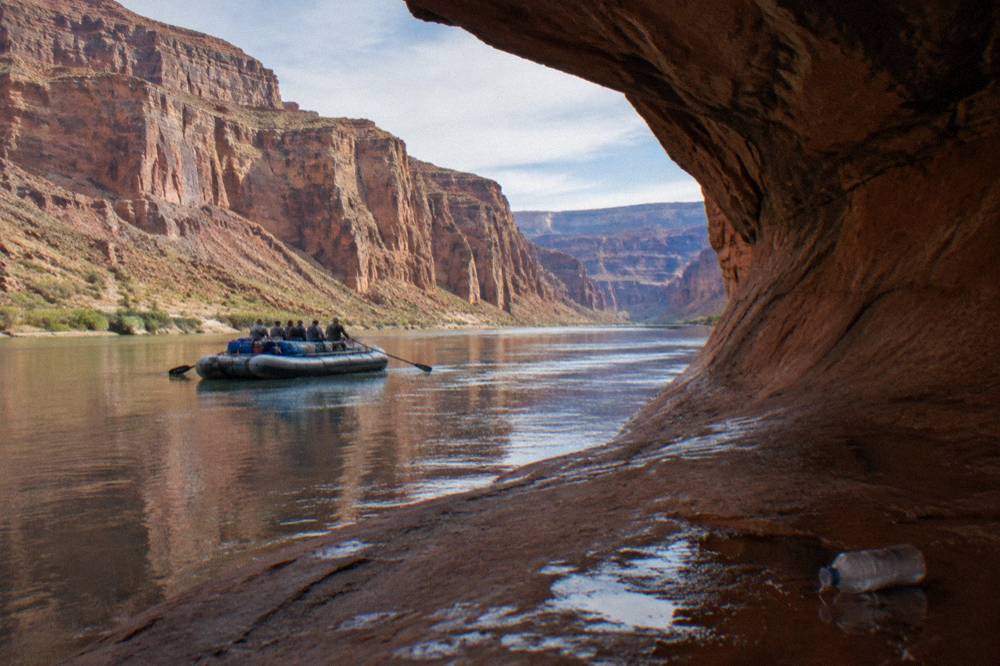
You need to be in solid shape for a multi-day trip: these outings run three to eighteen days on the river, with hikes in and out of side canyons, camping, and daily sun exposure, all across 226 river miles from Lees Ferry to the Diamond Creek and Pearce Ferry area. There is no universal minimum age; operators set their own, with ages as young as 7 on short sections and 12 on longer ones.
The physical load comes less from the rafting than from everything around it. On a motorized expedition the boat does the work through the rapids, but each day brings camp set-up, optional hikes up side drainages on rough trail-less terrain, and sleeping outdoors for nights on end. On oar, paddle or dory trips the days are longer on the water and guests may row or paddle. The National Park Service describes the full range: large motorized rafts, oared rafts, paddle rafts and dories, in trips lasting 3 to 18 days, operated by 16 authorized companies under contracts running through 2033.
The two multi-day listings sold here are both run by Aramark's Wilderness River Adventures arm. The 3-day trip from Las Vegas, from $1855 per person, includes camping, all meals and a helicopter flight, and is a new listing with no reviews yet. The 6-day motorized trip from Page, from $3420 per person, also covers meals and a flight out, and likewise carries no reviews yet, so judge these on their stated inclusions rather than traveler verdicts. Both are motorized, which is the most forgiving format for first-timers on a long trip.
Preparation advice from operator pages converges on a few points: be comfortable being active outdoors all day, be able to walk on uneven rock, and build some conditioning before launch if your days are normally sedentary. The commercial season runs April through October, and summer departures ask more of your heat tolerance than spring and fall ones. If the multi-day question for you is really "which length," the guide to multi-day Grand Canyon rafting trips breaks down the itineraries.
That last point deserves a sentence of respect. The private-permit lottery exists because running the full canyon under your own power, without a guide, is hard enough that the park rationed it. Guests on commercial trips get licensed guides, managed equipment and a set itinerary; the difficulty they sign up for is real but supervised.
Which Trip Should A Beginner Actually Book?
Nervous or totally inexperienced beginners should book a smooth-water float first, either the Page half-day or a Black Canyon float, where the only requirement is sitting in a boat. Confident beginners who want rapids in one day should book the Grand Canyon West whitewater trip, a guided motor raft with minimum age 8, while fit beginners with a week should choose a motorized multi-day trip, where the raft carries the load and the challenge is the duration. If worries about safety are holding you back, the guide to whitewater rafting fatality rates explains why a single number is hard to pin down and what actually drives risk on guided versus private trips.
The honest way to pick is to audit three things: your comfort being splashed and jarred, your heat and stamina on long outdoor days, and how you feel about camping. Rapids on a guided motor raft feel like a sustained roller-coaster stretch, wet and loud but controlled. The half-day float from Page, by contrast, is close to a scenic cruise; one guest review of the Black Canyon float notes "our kids got to play in the water, we stopped at a cave to feel a hot spring," which captures the mood of that tier.
Here is the full ladder in one view, built from the listings on this site.
| Difficulty rung | Trip type | Example trip on this site | Guide rows the raft | Fitness asked | Age floor |
|---|---|---|---|---|---|
| Easiest | Short Black Canyon float | Hoover Dam 1.5-Hour Raft Tour, from $69 | Yes | Minimal | See listing |
| Easy | Half-day smooth float | Horseshoe Bend Float Trip, from $149.51 | Yes, motor raft | Minimal | 4 |
| Easy plus | Float with swim stop | Hoover Dam Raft Tour with Transport & Swim, from $119 | Yes | Minimal | See listing |
| Moderate | One-day whitewater | Grand Canyon West Whitewater, from $688.85 | Yes, motor raft | Moderate stamina | 8 |
| Demanding | Multi-day motor expedition | 6-Day Motorized Raft Trip, from $3420 | Yes | Good conditioning, camping comfort | Operator sets |
Notice what is absent from the table: any requirement to know how to row, to swim a set distance, or to have rafted before. None of the day trips listed here asks for prior experience. Life jackets are worn throughout, and the park's safety framing for commercial trips centers on licensed guides and concessioner equipment.
If you are still torn between the calm-water and whitewater days, the comparison of one-day Grand Canyon rafting options walks through the same choice with more price detail.
Does Age Or Ability Rule Any Trip Out?
Mostly age, not ability: minimums run 4 on the Page floats and 8 on the Hualapai whitewater day trip, while multi-day operators set their own, with listings showing 7 or 8 on short trips and 12 on longer ones. No day-trip listing states a swimming requirement, though water comfort and the provided life jacket are assumed, and raft boarding happens from a beach or dock.
The pattern across the official pages is consistent. Grand Canyon West's river pages state a minimum age of 8. The Page float operator states 4 and up. For multi-day trips the park sets no single age, and operator examples range widely: one company lists 7 or older on a short lower-canyon trip and 12 or older on longer ones, another 8 or older on motorized trips, with adults accompanying minors. Those ages come from operator pages, not from the day-trip listings here, so confirm the floor for your specific departure on the booking page. And if you're still deciding how to reach the river in the first place, the drive or guided tour comparison weighs renting a car against trips that include transport.
Older travelers and non-swimmers succeed on this river more often than people expect, for a simple structural reason: almost everything sold here is a guided motor or oar raft, not a do-it-yourself paddle. The Colorado's commercial outfitters are built for first-timers. The genuine exclusions are medical ones, heart conditions that a cold-water drench could aggravate, pregnancies far along, injuries that bracing through waves would punish, and the trips' own fine print, not a fitness test at the dock.
Families weighing the decision can pull more detail from the guide to Grand Canyon rafting with kids, and nervous readers may want the plain-English safety walkthrough in is Grand Canyon rafting safe.
How Do You Train Before A Grand Canyon Trip?
For the float tiers, no training at all is needed. For the one-day whitewater trip, a baseline of general fitness, comfortable walking an hour outdoors in heat, is plenty. For a multi-day expedition, spend four to eight weeks building walking endurance on uneven ground, core and grip strength, and heat tolerance, and practice a night or two camping if you have never camped. The raft handles the river; your body handles the days.
The conditioning that pays off is unglamorous. Long walks with a daypack, stairs and hills for legs and lungs, and some planks and carrying work for core and grip cover nearly everything a motorized trip asks. If you have chosen an oar-powered or dory multi-day trip, add rows or resistance-band pulls, because guests who want to row can, and the guides will let a willing guest work. A review of the three-hour Black Canyon motorized float puts the day-trip stakes in perspective: "Wear sunscreen even if it is cloudy and cool. Take video so you can get the guide's narration as well." The preparation advice for that tier is literally sunscreen.
Mental preparation matters more on the whitewater day than physical prep. The rapids are loud, wet and abrupt; the calm stretches are serene. Knowing that the sequence is jolt then drift, repeated, helps first-timers relax into it. One guest on the same three-hour motorized float called it "a must do whilst in Vegas," which tells you the intimidation factor is lower than the word "whitewater" suggests for the Grand Canyon West tier, where a guide pilots the boat and the minimum age is 8.
Packing is part of difficulty management, too. Quick-drying clothes, secure footwear that can get wet, a hat, and reef-safe sunscreen cover most of it; the guide to what to wear Grand Canyon rafting has the full list, and the park concessioner pages recommend layers for cold-water splashes on every tier. Knowing what to leave out matters just as much, and the what not to wear when white water rafting check flags the fabrics and footwear that fail on cold Colorado River water.
Whatever tier you settle on, the trips below span the whole difficulty ladder again, from the entry float to the six-day expedition, each with live availability.
Common Questions About Grand Canyon Rafting Difficulty
How Difficult Is Rafting The Grand Canyon?
It depends entirely on the trip: smooth-water floats are easy enough for four-year-olds, the one-day West Rim whitewater trip is a moderate guided adventure with a minimum age of 8, and multi-day expeditions of three to eighteen days demand real conditioning and camping comfort. Pick the rung, not the river.
Do You Need Experience To Raft The Grand Canyon?
No commercial trip listed on this site requires prior rafting experience. Guides pilot the motor and oar rafts, guests ride and brace, and the pre-trip safety briefing covers the rest. Experience only matters if you want to row on a multi-day oar trip or run the canyon privately under your own permit.
Can Beginners Do The Whitewater Day At Grand Canyon West?
Yes. The trip is designed around a guided motor raft with a minimum age of 8, a helicopter exit instead of a hike out, and no stated fitness or experience requirement. Beginners should expect to get wet, hold on through rapids, and spend a full eight-hour day outdoors in desert heat.
How Fit Do You Need To Be For A Multi-Day Grand Canyon Trip?
Comfortably active rather than athletic. Operator pages point to all-day outdoor stamina, walking on uneven rock for side-canyon hikes, and tolerance for sun and camping as the real requirements. Ages are operator-set, with examples from 7 or 8 on short trips to 12 on longer ones, so check your specific departure.
Is The Water Cold On These Trips?
Yes, on the upper sections. The park states Black Canyon water below Hoover Dam sits in the low 50s F year round, and trips there run in every month. Splashes and optional swims are brief. Dam releases and weather set daily conditions, so no trip can promise what the river will feel like on your date.
Choosing between tiers is easier with the comparison pieces on Grand Canyon Rafting Tours: the difficulty question is really a matching exercise between your fitness, your nerve, and the rung of the ladder you book.