How Many Days Does It Take To Raft The Grand Canyon?
Grand Canyon river trips run from a 5-hour smooth-water float to 18-day full-canyon expeditions. Here is how trip length works, what each length costs, and how to pick.
Trip length decides everything else about a Grand Canyon river trip: the price, the minimum age, how much you pack, and how far in advance you book. The park's authorized concessioners sell guided trips ranging from 3 to 18 days on the main corridor between Lees Ferry and the Pearce Ferry area, while two much shorter formats exist at the edges of the canyon. One is the smooth-water half-day float below Glen Canyon Dam out of Page. The other is the one-day whitewater trip on the Hualapai stretch at the west end. If your schedule is tight, you may also be weighing whether the canyon can share an itinerary with Hoover Dam, and our guide to pairing Hoover Dam with the Grand Canyon on the same day shows how those combined tours stack up against single-site visits.
This article walks through the actual lengths on the market, why the full canyon cannot be done quickly, what the short guided options cover, and how the trips listed on this site, including the 3-day Grand Canyon camping trip from Las Vegas, fit into the picture.
How Many Days Does It Take To Raft The Grand Canyon?
A full Grand Canyon rafting trip through the national park takes 3 to 18 days with an authorized commercial company, covering the 226 river miles from Lees Ferry to the Diamond Creek and Pearce Ferry area. Partial-canyon trips of 3 to 7 days cover only the upper or lower half. If you want the river in a single day, the only options are smooth-water floats from Page and the one-day whitewater trip on the Hualapai stretch. Once you've settled on a trip length, our guide to rafting through the Grand Canyon explains the permit lottery and other ways to get on the river.
Those ranges come straight from the park service, which licenses 16 commercial river companies under contracts running through the end of 2033. The shortest commercial trips, three to four days, run only part of the canyon, typically the upper or lower half, and end with a helicopter ride out or a take-out at a mid-canyon access point. The longest, 15 to 18 days, carry oar rafts and dories down the entire 226-mile corridor. Motorized rafts compress the same distance into about 6 to 8 days because they keep moving through the calm stretches between rapids.
The reason for the spread is simple geography. There are only a few places where a road reaches the river: Lees Ferry at the top, Diamond Creek near the bottom, and a small number of helicopter-access points in between. Once you launch, the canyon itself sets your minimum pace.
The park spells out the commercial trip structure on its river concessioners page: each company offers trips lasting 3 to 18 days in motorized rafts, oared rafts, paddle rafts, and dories. Those trips are often reserved a year or two in advance, so the day-count question is not academic. It is the first filter on the calendar.
Why Full-Canyon Trips Cannot Be Shortened
The full 226-mile run from Lees Ferry to Diamond Creek takes 3 to 18 days because river miles, camps, rapid sequences, and exit logistics fix a floor under the schedule. Commercial motor rafts finish it in roughly 6 to 8 days, oar-powered trips in 12 to 18. There is no road out for most of the canyon, so speed is capped by where you can actually exit.
Think of the corridor as a one-way street with two toll booths. You put in at Lees Ferry, the only place in Glen Canyon where you can drive to the Colorado. You take out at Diamond Creek on the Hualapai side, or at Pearce Ferry a few miles further downstream. Between those points the canyon is roadless for its whole length. Helicopters can lift passengers out at a couple of approved spots, which is exactly how the short partial trips work: run the upper half, fly out.
The pacing also reflects how trips actually run. Multi-day rafts stop to camp on beaches, hike side canyons, and scout or play in the big rapids. A trip that simply raced downstream would defeat most of the point of going. Trip length, in other words, is partly a schedule constraint and partly the product itself: the days between the rapids are when the canyon does its slow work on you.
A rough breakdown of what's on the market:
| Trip format | Typical length | What it covers | Power type |
|---|---|---|---|
| One-day smooth-water float | About 5 hours | Glen Canyon Dam to Lees Ferry, about 10 river miles | Motor raft |
| One-day whitewater | 1 day | Hualapai stretch from Diamond Creek, with helicopter exit | Motor raft |
| Partial canyon, short | 3 to 4 days | Upper or lower canyon only, helicopter or Diamond Creek exit | Motor or oar |
| Partial canyon, longer | 5 to 7 days | Roughly half the corridor plus more side hikes | Motor, oar, or dory |
| Full canyon, motor | About 6 to 8 days | All 226 miles, Lees Ferry to Diamond Creek area | Motor raft |
| Full canyon, oar or dory | 12 to 18 days | All 226 miles at human-powered pace | Oar, dory |
The table's upper rows are the two one-day formats, and they are genuinely one-day products, not compressed versions of the expedition trips. The park's own one-day river trip page confirms the distinction: the only one-day trips inside the park's corridor are the smooth-water half-day and full-day floats between Glen Canyon Dam and Lees Ferry, run by Wilderness River Adventures out of Page. Whitewater in a single day happens only on the Hualapai section at the west end, outside the national park's licensed corridor.
Can You Raft The Grand Canyon In One Day?
Yes, in two specific places, and neither is the full canyon. The smooth-water half-day float from Page covers about 10 river miles between Glen Canyon Dam and Lees Ferry in roughly 5 hours. The one-day whitewater trip on the Hualapai stretch runs from Diamond Creek with a helicopter exit to the rim, about 8 hours door to door from Peach Springs.
The Page float is the gentlest product on the river. Guests board a bus in Page, ride about an hour to Lees Ferry, and drift down flat water with no rapids. The listing for the Horseshoe Bend Float Trip in Page describes exactly this: 5 hours, bus from Page included, minimum age 4, from $149.51 per person, and it carries a 4.9 rating from 194 reviews. Reviews read the way a calm-water day should. Donna R called it "easy, informative, fun, and safe for all ages," and Patricia M wrote that "the scenery is stunning. The guides are super knowledgeable and friendly."
The one-day whitewater trip is the Grand Canyon West package run by the Hualapai's river operation: a motorized raft through rapids and calm stretches on the Diamond Creek section, lunch on a beach, and a helicopter flight from the river back up to the rim. The version listed on this site, Grand Canyon West: Whitewater Rafting, Helicopter, & Skywalk, bundles ground transport from Hualapai Lodge and the Skywalk All-Access Pass, runs about 8 hours, carries a 5 rating from 4 reviews, and starts at $688.85 per person. Minimum age is 8. The Hualapai river season runs April to October.
Neither one-day format touches the 226-mile corridor, and that is the honest framing: a day trip gives you the Colorado River inside the canyon walls, but a fraction of it. For travelers who cannot commit multiple days, they are the only real options.
What A 3-Day Trip Actually Covers
A 3-day commercial trip covers roughly half the canyon, not the whole thing. You launch at Lees Ferry, run the upper corridor's rapids, camp two nights on beaches, and exit by helicopter to the rim, or continue from a mid-canyon point on a later trip. Expect all meals on the river and a pickup that includes the drive from Las Vegas.
The 3-day trip listed here, the Las Vegas: 3-Day Grand Canyon Rafting & Helicopter Tour from Aramark's Wilderness River Adventures, is a partial-canyon camping itinerary: transport from Las Vegas included, all meals included, and a helicopter extraction from the river at the end. It is a new listing, no reviews yet, priced from $1855 per person. Three days is the shortest guided trip that includes real whitewater inside the national park corridor, an overnight camp on a Colorado River beach, and the slow-canyon experience that day trips cannot deliver.
Three days also happens to be the minimum the park's concessioner structure allows. The park's commercial season runs April through October, and even short trips are often booked well ahead. If you are weighing a 3-day trip against a week-long one, the honest tradeoff is this: three days gives you the texture of the canyon, camp life, and a solid run of rapids, while leaving the lower canyon, including its biggest drops, for a return trip.
What A 6-Day Trip Adds
A 6-day motorized trip covers the full 226 miles from Lees Ferry through to the lower canyon, at motor pace, with about five nights of camping and every meal on the river. Compared with a 3-day partial trip, it trades a shorter commitment for the complete corridor, including the rapids and side canyons of the lower half.
The 6-day listing on this site, Grand Canyon: 6 Day Motorized Raft Trip with Meals & Flight from Wilderness River Adventures, is also a new listing with no reviews yet, from $3420 per person, departing from Page with meals and a flight component included. It represents the motor-powered end of the full-canyon market: the same 226 miles an oar dory takes two weeks to run, compressed into under a week by a motor. The wider set of guides lives on Grand Canyon Rafting Tours.
The difference between three days and six is not just double the time. It is a different canyon. The upper and lower halves have distinct characters, different rapids, different geology as the river cuts through older rock downstream, and the full-canyon trips are the only ones that pass through all of it. For travelers with a week available, the 6-day motor trip is the shortest complete run on the market.
How Trip Length Changes The Price
Longer trips cost more in total but less per day. Operator pages for the 2026 season quote roughly $1,933 to $2,432 for 3 to 4-day trips, $3,677 to $4,799 for 5 to 7 days, and $5,857 to $9,499 for 12 to 14-day oar trips, with full 15 to 18-day expeditions starting from $9,199. These are operator-quoted ranges, not fixed prices.
Here is how the shapes line up, using the two multi-day trips listed on this site plus the operator-quoted market ranges:
| Trip length | Typical price per person | Source of the figure |
|---|---|---|
| 3-day partial canyon from Las Vegas | From $1855 | Listing on this site |
| 6-day motorized full canyon | From $3420 | Listing on this site |
| 3 to 4-day partial, market range | About $1,933 to $2,432 | Operator pages, 2026 season |
| 5 to 7-day trips, market range | About $3,677 to $4,799 | Operator pages, 2026 season |
| 12 to 14-day oar trips, market range | About $5,857 to $9,499 | Operator pages, 2026 season |
| 15 to 18-day full expeditions | From about $9,199 | Operator pages, 2026 season |
Per day, the arithmetic favors the longer trips: a 3-day trip at $1855 works out to a higher daily rate than a 6-day trip at $3420, and full-canyon oar expeditions, expensive in total, are often the cheapest per river mile. The extra days buy rapids, side hikes, and camps the short trips physically cannot reach.
Minimum ages vary by operator and trip length rather than by any park-wide rule. Operator pages list examples from 7 or 8 on short motorized trips to 12 on longer oar and dory expeditions. If you are planning with children, read our guide to Grand Canyon rafting with kids before committing to a length.
How Fast Can Private Boaters Go?
Private permit holders run the same corridor in 12 to 25 days, the launch dates set by a weighted lottery each February. For the 2027 launch year the park offered 478 permits for those 12 to 25-day trips, with a $25 lottery application, a $200 or $400 trip deposit, and a $90 river permit per participant. Private groups cannot legally compress the trip the way commercial helicopters allow.
The lottery is the private alternative to a guided booking, and it explains part of why commercial trips are valued: a guided seat costs money but skips a lottery that most applicants do not win in a given year. The park's weighted lottery page details the costs and the February application window, and results land by the end of the month.
The length band for private trips, 12 to 25 days, also tells you something about pace. Private groups are typically oar- and paddle-powered, and the park's permit structure assumes that speed. A private motor trip is possible but rare, and the seasonal and equipment logistics mean most private groups treat the canyon as a two-to-three-week expedition, planned a year or more out.
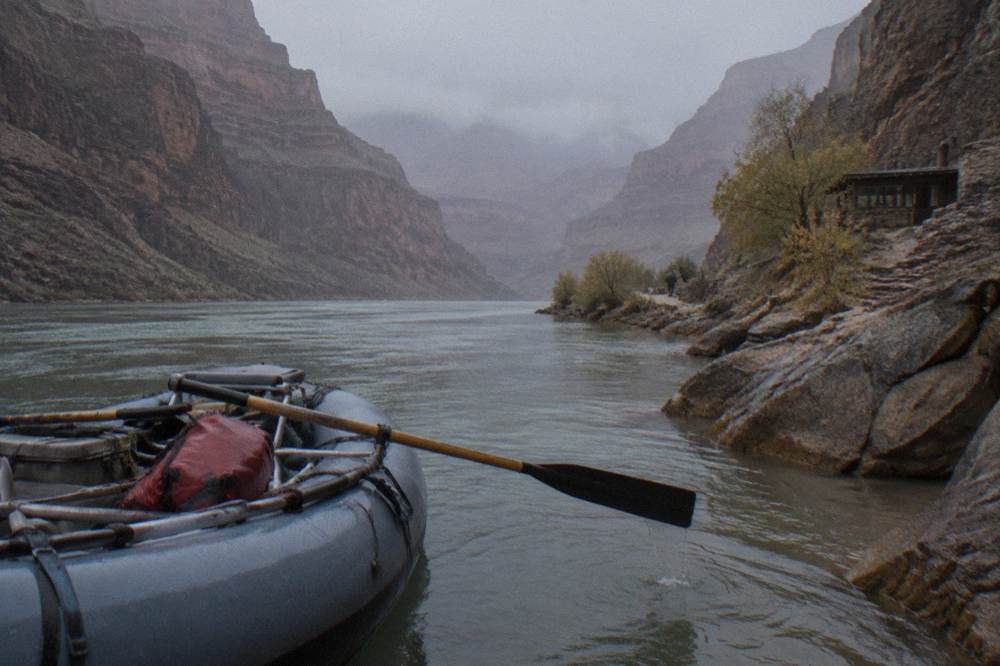
For most readers, the practical takeaway is simpler: if the lottery and the two-week commitment are out of reach, a commercial trip is the realistic path, and the choice collapses to 3-day partial, 6 to 8-day full canyon, or one of the single-day formats.
Which Trip Length Should You Choose?
Choose by available days and tolerance for camping, not by price alone. With one day, take the Page float or the Hualapai whitewater trip. With three days and a Las Vegas base, the 3-day partial-canyon camping trip fits. With six or more days, a full-canyon motor trip covers all 226 miles. Only book 12 to 18 days if you genuinely want the oar-paced expedition.
The one-day formats are also the family-friendliest and cheapest entries to the river. The Horseshoe Bend float from Page takes children as young as 4 and starts at $149.51. A different way to sample the Colorado in a few hours is the 3-Hour Black Canyon Motorized Raft Tour with Optional Transport below Hoover Dam, from $140 per person with lunch, 4.8 from 413 reviews, floating the calm water of Black Canyon rather than the Grand Canyon itself. Reviews on that listing lean enthusiastic; Lynne N called it "a must do whilst in Vegas." If you're hoping to swim or get splashed, our guide to how cold the Colorado River runs in the Grand Canyon will help you pick the right month.
Two planning notes that length decisions depend on. First, commercial trips inside the park run April through October only, so your available dates narrow the length options further; our piece on the best time to raft the Grand Canyon breaks the season down. Second, cancellation windows differ by listing: the Page half-day Aramark listing requires cancelling up to 2 days in advance with a fee, while most Las Vegas day tours allow free cancellation up to 24 hours before. Read the booking page for the specific trip.
The deeper comparison, motor raft versus oar raft and what each does to trip length, is covered in full in our motor versus oar guide. For a quick framing of what the whole category costs, the cost guide walks every format line by line.
Common Questions About Grand Canyon Trip Length
How Many Days Does It Take To Raft The Grand Canyon?
Full-canyon commercial trips take 3 to 18 days depending on craft and route: motor rafts run the 226-mile corridor in roughly 6 to 8 days, while oar and dory trips take 12 to 18. Partial-canyon trips of 3 to 4 days cover half the river with a helicopter exit. One-day options exist only as the smooth-water Page float and the Hualapai whitewater trip.
Can you raft the entire Grand Canyon in one day?
No. The 226-mile corridor inside the national park cannot be run in a day with any authorized operator. The one-day products are the smooth-water float between Glen Canyon Dam and Lees Ferry, about 5 hours, and the one-day Hualapai whitewater trip from Diamond Creek with a helicopter exit, about 8 hours from Peach Springs.
What is the shortest multi-day Grand Canyon rafting trip?
Three days. Commercial concessioners run 3 to 4-day partial-canyon trips covering the upper or lower half, ending with a helicopter flight to the rim. The 3-day trip listed on this site, from Las Vegas with all meals and camping, is from $1855 per person.
How far in advance do you need to book?
Commercial trips are often reserved a year or two in advance, especially full-canyon departures, since the 16 authorized companies operate a capped number of launches in an April to October season. Short trips and day floats book much closer in, but summer dates still fill early.
Does a longer trip cost more per day?
Generally the opposite. Operator pages quote about $1,933 to $2,432 for 3 to 4-day trips and $3,677 to $4,799 for 5 to 7-day trips, so the daily rate falls as length rises. The total obviously climbs, and full 15 to 18-day oar expeditions start from about $9,199 per person.