What Is The Fatality Rate Of Whitewater Rafting? Grand Canyon Safety Context
No reliable single fatality rate exists for whitewater rafting, and this page explains why. Here is how guided Grand Canyon, Black Canyon and West Rim trips differ from private runs, and what actually drives risk.
The question sounds like it should have a clean answer. It does not. No government agency, industry body or academic source publishes a single, current fatality rate for whitewater rafting as an activity, and the numbers that do circulate online mix eras, rivers, private expeditions and commercial day trips into one meaningless average. This page will not invent a figure. Instead it explains what is actually known, why a single rate misleads even when someone calculates one, and what verifiable structures, licensed concessioners, professional guides, age minimums and cold-water rules, separate the trips listed on Grand Canyon Rafting Tours from a private river expedition.
What Is The Fatality Rate Of Whitewater Rafting?
No reliable fatality rate for whitewater rafting exists in the public record, and any specific percentage you see online should be treated as unsupported. The National Park Service publishes concessioner rules, permit systems, and safety guidance for the Colorado River, but it does not publish a per-trip or per-participant death rate for commercial rafting, and nobody counts total rafters with enough precision to make a rate meaningful.
That is not an evasion, it is the finding. A rate needs two numbers: deaths and exposure. Deaths on regulated rivers are investigated and reported by the agencies involved. Exposure, total participant-days across commercial and private trips on hundreds of rivers, is not tracked in any single place. When a website prints a tidy figure anyway, it is usually stitching together old incident summaries or lifting a number from one river system and presenting it as universal. The full guide on Grand Canyon rafting safety covers what the park's own pages do and do not say about river incidents.
What the official record does establish is structure. The National Park Service authorizes a fixed set of commercial river concessioners for Grand Canyon trips lasting three to eighteen days, with contracts running through the end of 2033, per the park's river concessioners page. Those companies operate under permit conditions, equipment requirements and licensed guides. That regulatory frame, not a published statistic, is the best available answer to "how safe is a commercial trip."
For a safety-minded reader, the practical split is simpler than any rate. The one-day river trips the park itself recognizes are smooth-water floats on the Colorado between Glen Canyon Dam and Lees Ferry, not whitewater. Whitewater days exist at the West Rim through the Hualapai operation, and multi-day whitewater exists through the sixteen authorized concessioners. A reader choosing between a float and whitewater is choosing between two differently regulated, differently equipped experiences, and the rest of this article walks through each.
Why A Single Fatality Rate Misleads Even When Someone Calculates One
A single fatality rate misleads because it averages away the three variables that matter most: water, craft and leadership. A hot summer afternoon on a mellow section shares almost nothing with a cold-water canyon run in a loaded private raft, yet a blended statistic treats them as one activity, even though cold water is a documented factor, motorized and oared craft handle differently, and guided commercial trips carry equipment and trained leaders that private groups must supply themselves.
Start with water. The park's own Black Canyon page states plainly that water temperatures are cold, in the low 50s Fahrenheit, year round, because the river comes out of the bottom of a dam. The Lake Mead National Recreation Area paddling page repeats the warning in the same words. Cold water changes the consequence of any mistake, on any river, in any craft: a swim that would be refreshing in warm water becomes an emergency in water this temperature. A fatality rate that pools warm rivers and cold rivers tells a reader nothing about the trip they are actually considering.
Then leadership. A commercial trip puts a professional guide on the boat, and on many trips every passenger wears a provided life jacket from launch to take-out. A private trip, even a well-prepared one, depends on the skill the group brings. The park's permit system acknowledges this gap indirectly: private Grand Canyon launches are awarded through a weighted lottery whose applicants accumulate priority over repeated years, which reflects how scarce and demanding those launches are. Blending guided and unguided outcomes into one "rafting" number erases the single biggest differentiator.
Finally, the activity itself is not one thing. The tours listed on this site span a 1.5-hour dam-side float, a 5-hour smooth-water Page float, an 8-hour West Rim whitewater day with a helicopter exit, and multi-day expeditions. Lumping them produces a statistic that describes none of them. When a source refuses to print a number, as this page does, it is usually because the number would be false precision.
How Commercial Guided Trips Differ From Private Trips
Commercial Grand Canyon river trips run through sixteen National Park Service concessioners under contracts effective 2024 through 2033, using licensed guides on trips of three to eighteen days from Lees Ferry toward the Pearce Ferry area. Private trips require a weighted-lottery permit that applicants may wait years to win, plus per-participant fees paid directly to the park. The difference in oversight, equipment and leadership is the practical safety story, and it is documented rather than statistical. If you're curious why so much of the canyon stays off limits to casual visitors, why most of the Grand Canyon remains closed explains what those restrictions protect and how rafters actually reach the river corridor.
The concessioner system is the core of it. The park's selection announcement names sixteen companies, among them Aramark-Wilderness River Adventures, Hatch River Expeditions and Arizona River Runners, each contracted for a defined stretch of years. Their trips are guided by people whose job is the river, on craft maintained under permit conditions. The park also states that commercial trips are often reserved a year or two in advance, which is itself a signal: the regulated product is in demand and capacity-limited.
Private trips are a different animal. The weighted lottery for the 2027 launch year offered 478 permits for 12-to-25-day trips, with a $25 lottery application, a $200 or $400 trip deposit and a $90 river permit per participant. Those requirements filter for experience and commitment, which is the point: the park expects private groups to be self-sufficient in a way it never expects of a paying guest on a concessioner's raft.
The three-day and six-day expedition listings on this site, from $1855 and from $3420 per person respectively, sit on the commercial side of that line. Both are new listings with no reviews yet, and both include pickup and meals, which means the operator is managing logistics a private group would carry alone. Neither carries a rating worth citing yet, and an honest page says so.
Is The Black Canyon Float Safer Than Whitewater?
Yes: Black Canyon trips below Hoover Dam are floats, not whitewater runs. The water trail is 30 miles of flat, dam-controlled water with no rapids, and the park confirms it can be paddled year round. Whether that reads as safer depends on what you fear, but no rapids, a guide, and calm, cold water make it the gentlest entry point on this site.
The geography deserves honesty, because plenty of marketing blurs it. Black Canyon is downstream of Hoover Dam inside Lake Mead National Recreation Area. Launching at the dam itself is restricted to a limited number of permitted vendors, and guests reach the water on a narrated bus through the Hoover Dam Security Zone, per the park's water trail page. Willow Beach, about ten miles downstream, is the common take-out, and Emerald Cave sits two miles upriver of it. None of that is whitewater.
The flagship listing here is the 3-Hour Black Canyon Motorized Raft with lunch, from $140 per person, rated 4.8 from 413 reviews, with free cancellation up to 24 hours before the start time. It is the site's featured tour for a reason: it answers the safety question with structure rather than adrenaline. Guest reviews on the listing are unusually focused on the guide. "Wonderful guides who shared so much knowledge," one traveler wrote. Another advised, plainly, "Wear sunscreen even if it is cloudy and cool," which is the kind of practical note a nervous first-timer needs more than a statistic.
The shorter Hoover Dam 1.5-Hour Float makes the point even more sharply. From $69 per person, rated 4.9 from 254 reviews, it puts a family on the river for ninety minutes with no rapids in play. One review calls it "affordable, informative, family friendly, entertaining and timely," and mentions kids playing in the water and a hot-spring cave stop. Water play is possible because the water is flat, though it is worth repeating: it is still in the low 50s Fahrenheit year round, so swimming is bracing, not balmy.
What The Grand Canyon's One-Day Options Actually Look Like
A one-day Grand Canyon river trip comes in exactly two forms: the only style the National Park Service recognizes, a smooth-water float on the Colorado between Glen Canyon Dam and Lees Ferry departing from Page, or a single-day whitewater run outside the park's concessioner system at Grand Canyon West, where the Hualapai operation runs April through October and requires a minimum age of 8.
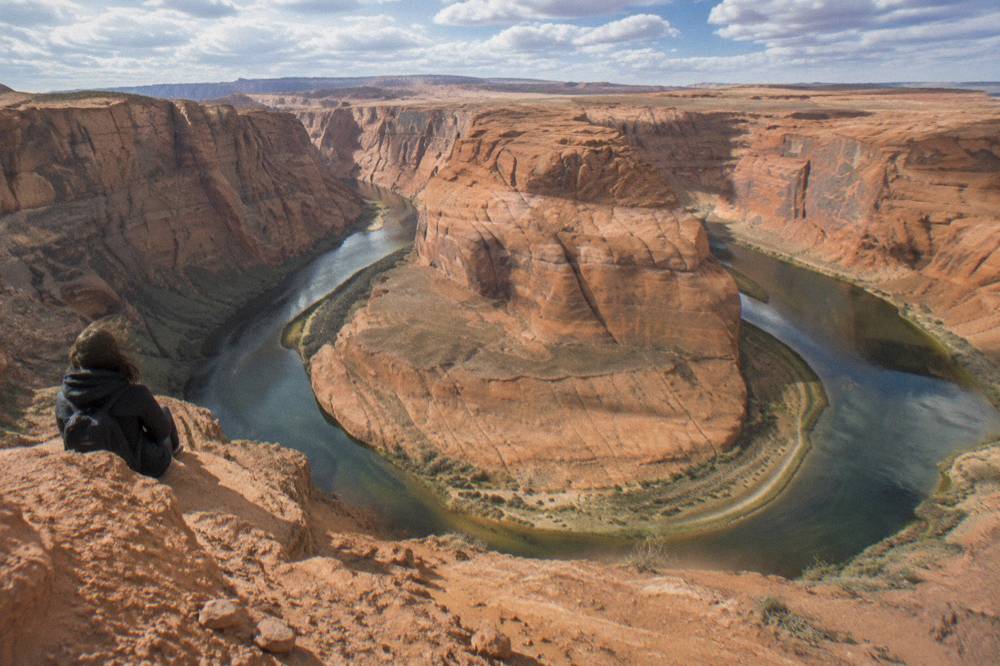
The Page float is the park's own day trip. The park's one-day river trip page describes smooth-water trips operated by Wilderness River Adventures, beginning in Page with a bus to Lees Ferry, about ten river miles with no rapids. The 2026 season ran from the start of March to early November, the minimum age is 4, and the overlook parking at Horseshoe Bend costs $10 per vehicle in the City of Page lot. The Horseshoe Bend Float Trip in Page listing, from $149.51 per person and rated 4.9 from 194 reviews, sells that same trip; reviews read exactly as you would hope a family float would. "The float was easy, informative, fun, and safe for all ages," one guest reported.
| One-day option | Water style | Where it runs | From price | Rating and reviews | Minimum age |
|---|---|---|---|---|---|
| Horseshoe Bend Float Trip in Page | Smooth water, no rapids | Glen Canyon Dam to Lees Ferry | $149.51 per person | 4.9 from 194 reviews | 4 |
| Grand Canyon West Whitewater with Helicopter & Skywalk | Motorized whitewater | Diamond Creek launch, West Rim | $688.85 per person | 5 from 4 reviews | 8 |
| 3-Hour Black Canyon Motorized Raft | Flat water float | Below Hoover Dam, Black Canyon | $140 per person | 4.8 from 413 reviews | Not stated on listing |
The West Rim whitewater day is the other door, and it is a genuinely different product. The Hualapai operation launches at Diamond Creek near Peach Springs, runs rapids and calm stretches in a motorized raft with a Hualapai guide, stops for a beach lunch and an optional hike, then lifts guests out of the canyon by helicopter. The listing bundles ground transport from Hualapai Lodge and the Skywalk All-Access Pass, which is why its from-price of $688.85 per person differs from anything quoted on the operator's own pages; they are different products and are not compared here. Its rating of 5 comes from just 4 reviews, which is a real rating but a small pool, and this site prints the count so you can weigh it yourself.
Who Should Skip Whitewater Altogether?
Skip whitewater entirely if you cannot swim confidently, are traveling with children under 8, are sensitive to cold water, or only have a few hours to spare, because a guided float serves you better. The West Rim whitewater trip requires a minimum age of 8, the Page float accepts children from age 4, and Black Canyon floats run on flat water year round.
Age is the clearest line. The Hualapai whitewater day requires participants to be at least 8 years old. The Page float takes children from 4. The Black Canyon listings do not state an age minimum on the listing pages, so families with toddlers should ask the operator directly rather than assume. That single question, "how old must my child be," often answers the float-versus-whitewater debate before any discussion of risk does.
Cold water is the second filter. Dam-released river water in the low 50s Fahrenheit is a constant on both the Black Canyon and the Glen Canyon stretches. A fit adult who swims well may find it refreshing. A hesitant swimmer, a child, or an adult with a heart condition may not. Guided floats mitigate this with life jackets, calm water and a guide's judgment; whitewater adds speed and waves to the same cold. The park states the temperature plainly and lets you make the call, and so does this site.
Time and budget matter too. A ninety-minute float from $69 per person is a low-stakes experiment. An 11-hour helicopter-and-raft combo from $699 per person is a commitment. If a reader's real question is "will my nervous partner ever get on a river," the answer is to start with the half-day Page float or a Black Canyon raft and let the mildest version of the sport make the case.
How To Read Age Limits, Season Rules And Cancellation Before Booking
Age minimums, seasonal windows and cancellation cutoffs vary listing by listing, and reading them closely is the most useful safety step a booker can take. The West Rim season runs April through October, the Page float season runs roughly March into early November, and cancellation terms range from 24 hours before start time to three full days, with one Page listing canceling up to 2 days in advance with a fee. No blanket rule applies across the board.
Cancellation is the term people skip and then regret. The 3-Hour Black Canyon Motorized Raft allows free cancellation up to 24 hours before the start time. The Papillon Grand Celebration helicopter-and-raft combo requires three full days. One Page half-day listing (the Aramark one) cancels up to 2 days in advance with a fee, while its sister listing allows free cancellation up to 24 hours before start time. One National Park Express half-day is explicitly weather-dependent, offering a full refund or a new date if the operator cancels for poor weather. That last clause matters for a safety-minded reader: on rivers, weather and water releases decide whether a trip runs, and no operator can promise conditions.
| Listing | Cancellation terms (from the listing) | Season notes |
|---|---|---|
| 3-Hour Black Canyon Motorized Raft | Free cancellation up to 24 hours before start time | Paddling possible year round on the water trail |
| Horseshoe Bend Float Trip in Page | Free cancellation up to 24 hours before start time | Season about March to early November |
| Page: Horseshoe Bend Half-Day (Aramark) | Cancel up to 2 days in advance with a fee | Same trip, same season window |
| Grand Canyon West Whitewater, Helicopter & Skywalk | Free cancellation up to 24 hours in advance | Season April through October |
| Grand Celebration Helicopter with Rafting | Free cancellation up to 3 full days before start time | Helicopter flights weather-dependent |
| Las Vegas: 3-Day Rafting & Helicopter Tour | See booking page | New listing, no reviews yet |
Seasonality is a safety variable in disguise. The Hualapai river season opens in April and closes in October; the park's commercial river season for the big canyon trips also runs April through October; the Page float stretches from early March into early November; and the Black Canyon water trail can be paddled year round because dam releases keep the water moving and ice-free. A reader booking outside those windows will simply find no departures, which is the system working as intended. If you want the deeper comparison of trip styles, the guide to motor versus oar rafting explains how craft choice changes the ride.
One more habit worth forming: read the age line, the water description and the cancellation line together, in the same sitting. A listing that says "smooth water, no rapids, minimum age 4, cancel free up to 24 hours" is telling you a coherent story about who it is for. A listing that says "motorized whitewater, minimum age 8, cancel up to 3 full days" is telling a different one. The blog piece on rapid classes in the Grand Canyon covers the water side in more depth for readers who want it.
For readers whose curiosity runs past a day trip, the Las Vegas 3-Day Grand Canyon Rafting & Helicopter Tour sits at the expedition end: from $1855 per person, all meals, transport from and to Las Vegas, camping, a new listing with no reviews yet. It is the same commercial-concessioner world as the day floats, just longer, and the same reading rules apply.
What An Honest Answer Looks Like
An honest answer is structural, not numerical: no credible fatality rate exists, so judge the trip in front of you by its guide, its water, its age rules and its operator's record. On this site that means flat-water Black Canyon floats from $69 per person, a smooth Page float from $149.51, a whitewater day from $688.85, and multi-day expeditions from $1855, each with its own terms printed beside it. To see how the leading outfitters stack up across those same categories, read our comparison of Grand Canyon tour companies.
A reader who asks about fatality rates is usually asking something more specific: am I going to be okay, is my kid going to be okay, is this the right first river trip. Those questions have answers, and the answers are in the listing details rather than in an average. Water style, minimum age, guide included, life jackets provided, cancellation window, weather clause. The 3-hour motorized float below Hoover Dam answers all of them at a glance, which is why a reviewer called it "a must do whilst in Vegas" and why it anchors this site's Black Canyon coverage.
Common Questions About Whitewater Rafting Safety
What Is The Fatality Rate Of Whitewater Rafting?
No reliable public fatality rate exists for whitewater rafting. No agency publishes a per-participant death rate for the activity, and figures circulated online mix rivers, eras, private trips and commercial trips. Judge a specific trip by its operator, guide, water style, age minimum and cancellation terms instead of a statistic.
Is A Guided Raft Trip Safer Than A Private One?
Commercial Grand Canyon trips run through sixteen park-authorized concessioners under contracts through 2033, with licensed guides and permit-required equipment. Private trips require a weighted-lottery permit, per-participant fees and full self-sufficiency. The difference in oversight and leadership is documented and significant.
Is The Black Canyon Below Hoover Dam Whitewater?
No. Black Canyon is a 30-mile National Water Trail on flat, dam-controlled water inside Lake Mead National Recreation Area. Trips here, including the 3-Hour Black Canyon Motorized Raft from $140 per person, are floats with no rapids. The water stays in the low 50s Fahrenheit year round.
How Cold Is The Water On These River Trips?
The park states that Black Canyon water is in the low 50s Fahrenheit year round because it is released from the bottom of Hoover Dam. That is cold enough to matter in any incident, which is why guided trips provide life jackets and why the park repeats the warning on its paddling pages.
What Is The Minimum Age For Whitewater Rafting At The Grand Canyon?
There is no universal minimum. The Hualapai whitewater day at Grand Canyon West sets its minimum age at 8. The Page smooth-water float takes children from age 4. Black Canyon listings do not state an age on the listing page, so ask the operator directly.
Do These Tours Get Cancelled For Weather?
Some do. One half-day Hoover Dam listing is explicitly weather-dependent, offering a full refund or a new date if the operator cancels for poor weather. Weather and water releases decide whether any river trip runs, and no operator can guarantee conditions. Check each listing's cancellation terms before booking.